Core Knowledge Analysis of the Brake Pad Industry: A Comprehensive Guide from Materials to Selection
As a core component of a vehicle's braking system, the performance of brake pads is directly related to driving safety. With the continuous growth of China's vehicle ownership and the rapid rise of new energy vehicles, the brake pad industry is embracing dual opportunities of technological upgrading and market expansion. The market size reached approximately 45 billion yuan in 2024 and is expected to exceed 85 billion yuan by 2030. The following interprets the key knowledge of the brake pad industry from four dimensions: core composition, mainstream materials, selection logic, and industry trends.
I. Core Composition of Brake Pads
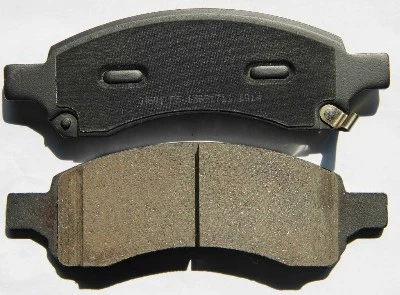
The structure of brake pads seems simple but incorporates sophisticated design, mainly consisting of three parts:
• Steel Plate: Serving as the basic load-bearing structure, it needs anti-rust coating treatment. Professional equipment can be used to test the coating quality to ensure durability.
• Heat Insulation Layer: Mostly made of high-temperature-resistant materials, it can effectively block the high temperature generated during braking from transferring to the calipers, preventing component failure due to overheating.
• Friction Block: The key part that directly contacts the brake disc to generate braking force. Its material formula determines the braking performance, noise level, and service life of the brake pad, making it the core focus of technological competition in the industry.
II. Comparison of Mainstream Brake Pad Materials and Their Performances
Material selection is fundamental to brake pad performance. Different materials correspond to different application scenarios and driving needs. Currently, mainstream materials on the market can be divided into five categories:
1. Semi-Metallic Material
• Composition: Contains 30%-50% ferrous metals (steel fibers, reduced iron powder, etc.), and is an early asbestos-free material that replaces asbestos.
• Advantages: Good heat resistance, high thermal conductivity, strong power absorption per unit area, capable of meeting high-speed and heavy-load braking needs, and low cost.
• Disadvantages: High braking noise, easy to generate dust, and causes severe wear to the brake disc.
• Application Scenarios: Mid-to-low-end passenger cars, commercial vehicles (heavy-duty trucks, buses), and other vehicle models that are cost-sensitive and require high-frequency braking.
2. Non-Asbestos Organic (NAO) Material
• Composition: Mainly composed of inorganic fibers, mixed with a small amount of organic fibers, and some products contain trace amounts of steel fibers.
• Advantages: Good environmental performance, low braking noise, little damage to the brake disc, and soft braking feel at low temperatures.
• Disadvantages: Poor high-temperature resistance, prone to thermal fading during long-term high-speed braking, and relatively short service life.
• Application Scenarios: Family cars mainly used for urban commuting, and users with a stable driving style who rarely drive on highways or mountain roads.
3. Ceramic Material
• Composition: Takes ceramic fibers as the core, added with reinforcing materials such as aramid fibers, with moderate density and stable structure.
• Advantages: Excellent comprehensive performance, low noise, low dust, long wear life, stable friction coefficient at high temperatures, and good protection for the brake disc.
• Disadvantages: High production cost, relatively weaker braking force compared to metallic materials, and not suitable for aggressive driving.
• Application Scenarios: Mid-to-high-end passenger cars, new energy vehicles, and users who value driving comfort and braking stability.
4. Powder Metallurgy Material
• Composition: Made from iron-based or copper-based powder materials through mixing, pressing, and high-temperature sintering.
• Advantages: Outstanding high-temperature resistance, long service life, and suitable for extreme braking conditions with high temperature and heavy load.
• Disadvantages: High braking noise, high product brittleness, severe wear to the brake disc (mating part), and high price.
• Application Scenarios: Engineering vehicles, heavy machinery, and other equipment that need to operate in harsh environments.
5. Carbon-Ceramic Material
• Composition: A new type of composite material synthesized at high temperature, with carbon fiber 3D felt as the framework and silicon carbide as the matrix.
• Advantages: Excellent heat dissipation performance, not affected by temperature, light weight, long service life, and can improve fuel economy and braking response speed.
• Disadvantages: Expensive price and low popularity.
• Application Scenarios: High-end new energy vehicles, performance sports cars, aircraft, and other fields with extreme requirements for braking performance. The market size is expected to reach the 10-billion-yuan level by 2025.

III. Key Guide for Brake Pad Selection and Replacement
1. Three Elements of Scientific Selection
• Matching Vehicle Characteristics: For new energy vehicles, ceramic or high-end composite materials with low noise, low wear, and high energy absorption should be preferred. For traditional fuel vehicles, NAO or semi-metallic materials can be selected according to their grades. For high-end vehicles, carbon-ceramic or special fiber materials are recommended.
• Focus on Core Parameters: A higher friction coefficient is not necessarily better; FF or FG grades are sufficient for ordinary family cars. For high-temperature resistance, F or G grades are selected; excessively high grades will instead affect low-temperature braking effect and brake disc cooling efficiency.
• Considering Application Scenarios: For frequent high-speed driving, mountain road driving, or heavy-load driving, high-temperature-resistant materials such as semi-metallic and powder metallurgy materials should be prioritized. For mainly urban commuting, focus on the comfort and environmental performance of NAO or ceramic materials.
2. Replacement Timing and Self-Inspection Methods
• Replacement Threshold: Brake pads must be replaced when their thickness is less than 2-3 mm. They also need to be replaced in a timely manner if there are cracks, hard spots, or abnormal braking noise.
• Simple Self-Inspection Tips: There is no need to disassemble the wheel hub; you can use a flashlight or mobile phone camera to illuminate through the gaps of the wheel hub to directly observe the thickness of the friction block. If there is a sharp whistling sound during braking, pedal vibration, or a significant increase in braking distance, an immediate inspection is required.
IV. Development Trends of the Brake Pad Industry
1. Continuous Market Expansion: Benefiting from the growth of vehicle ownership and the rise of new energy vehicles, the industry's compound annual growth rate is expected to reach 7.2%-9.5%, and the market size will approach 60 billion yuan by 2030.
2. High-End Upgrading of Materials: The market share of ceramic brake pads will increase from 35% to 48% by 2030, becoming the absolute dominant type. The penetration rate of carbon-ceramic materials in the high-end new energy vehicle field will continue to rise.
3. Technology Focus on New Energy Adaptation: The energy recovery system of new energy vehicles places higher requirements on brake pads, and special products with low noise, low wear, and high stability have become the focus of research and development.
4. Increased Industry Concentration: Local brands are gradually expanding their market share through technological innovation, and their proportion is expected to exceed 50% by 2030. Industry integration and intelligent production have become trends.
When selecting brake pads, it is necessary to balance safety, adaptability, and economy. Shandong Huaruifeng Machinery Co., Ltd. has deeply engaged in the brake pad field. Relying on its accurate grasp of industry needs, it provides high-quality products covering different materials and suitable for multiple vehicle models. It always uses quality and technology that meet industry standards to safeguard driving safety.