

Current Situation of the Brake Pad Market: Coexistence of Scale Expansion and Structural Differentiation
Global Market: Steady Growth, with New Energy Vehicles and Aftermarket as Core Drivers
The global brake pad market has been expanding continuously. It grew from approximately 12 billion US dollars in 2015 to 15 billion US dollars in 2023, exceeded 17 billion US dollars in 2025, and is expected to reach 20 billion US dollars by 2030. The compound annual growth rate (CAGR) from 2023 to 2030 is about 4.5%. The growth momentum comes from two core factors: first, the increasing penetration rate of new energy vehicles (NEVs) drives the growth of original equipment (OE) supporting demand; second, the growth of global car ownership leads to stock vehicles entering the brake pad replacement cycle, resulting in rigid release of aftermarket (AM) demand.
From the perspective of market structure, the OE market and the AM market develop in a "dual-track" manner. In 2025, the global OE market accounts for about 42%, which is greatly affected by the fluctuations in new car production and sales; the AM market accounts for 58%, maintaining stable demand due to the growth of car ownership. The AM growth rate in emerging markets such as China and India is more than twice that of mature markets.
Regional Markets: Distinct Differentiation, Each with Its Own Growth Logic
Chinese Market: As the world's largest automobile producer and seller, China's brake pad market scale reached 10 billion yuan in 2023, and is expected to increase to 12 billion yuan in 2025, with a CAGR of 8.2%, higher than the global average growth rate. It has a unique growth logic: the proportion of OE supporting volume for NEVs in 2025 will reach 35%, becoming an important growth driver; domestic car ownership has exceeded 380 million vehicles, and the average replacement cycle of brake pads is 3-5 years, which generates an annual aftermarket demand of over 3 billion yuan. At the same time, local enterprises occupy 70% of the aftermarket share, and are accelerating their penetration into the OE market, entering the supply chains of independent brands such as Geely and Great Wall. Some enterprises have achieved breakthroughs in exports through the research and development of copper-free materials, and the export volume is expected to grow by 18% in 2025.
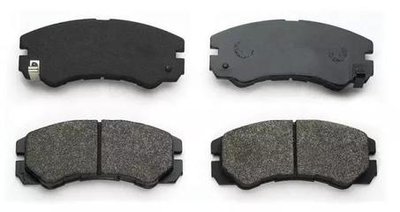
European and American Markets: These markets are highly mature with steady growth. In 2025, the European market scale is about 5 billion US dollars, and the North American market is about 4.5 billion US dollars. They are characterized by the AM market accounting for over 60%, and the demand for high-end ceramic brake pads and low-emission products being dominant. With high technical and brand barriers, international giants occupy a leading position.
Competitive Pattern: Concentration of Leading Enterprises, Competition Between Local and International Enterprises
The global market presents the characteristics of "concentration of leading enterprises and regional differentiation". In 2025, the market share of the world's top five enterprises (Bosch, Continental Group, Tenneco, Federal-Mogul, and TRW) reaches 38%, an increase of 3 percentage points compared with 2023.
International Giants: Relying on technological and brand advantages, they monopolize the high-end OE market (accounting for over 60%). Bosch and Continental Group take the lead in the research and development of EMB systems and low-emission materials; Tenneco has established cooperation with European German-speaking car enterprises and major Chinese brands, and its OE supporting volume in 2025 increased by 22% year-on-year. Its low-emission technology has been applied to a number of European passenger car models.
Local Enterprises: Represented by Chinese enterprises, they have made breakthroughs in the aftermarket. Relying on cost advantages and rapid response capabilities, they are penetrating into the OE market. At the same time, through technological research and development, they are catching up with the international advanced level and have advantages in price competition in emerging markets, but there is still a gap in high-end technology fields.
Development Trend of Brake Pads: Transformation Led by Technology, Policies, and Greenization
Technological Innovation: Comprehensive Breakthroughs from Materials to Systems
Material Upgrade: Low Emission and Long Service Life Become Mainstream
Driven by environmental protection regulations such as Euro 7 and China 7, low-emission friction materials have become the focus of research and development. Tenneco's new friction materials use natural minerals and recycled raw materials, reducing PM10 emissions by more than 40%. Some products can achieve a "service life equal to that of the vehicle", and reduce greenhouse gas emissions in the manufacturing process by 15%-35%, meeting the Euro 7 emission limits of 3 mg/km for pure electric vehicles and 7 mg/km for hybrid vehicles. At the same time, copper-free NAO (non-asbestos organic) materials are accelerating the replacement of traditional metal formulations. In 2025, their application proportion in the NEV field will reach 45% (compared with 28% in 2023), which is compatible with the motor energy recovery system, improving the braking response speed by 20% and reducing the wear of brake discs.
System Revolution: EMB Usher in a New Era of Braking
The traditional hydraulic braking system is gradually replaced by the electronic mechanical braking (EMB) system. The EMB abandons the hydraulic pipeline and directly drives the brake pad through the motor, achieving a weight reduction of 30%, a reduction in braking delay to 0.1 seconds, and an increase in energy recovery efficiency by 15%, which is compatible with the braking accuracy requirements of L3 and above intelligent driving. The global EMB market is growing explosively, and its scale is expected to approach 12 billion US dollars by 2031, with a CAGR of 264.7% from 2025 to 2031. Chinese enterprises have made technological breakthroughs. The world's first EMB project led by the Xu Feng team has been applied to L3-level autonomous driving models, and the supporting friction materials solve the problem of rust adhesion between front and rear pads, with reliability reaching the international leading level.
Digital R&D: Accelerate Technology Implementation
Artificial intelligence and virtual simulation technologies are widely used. Tenneco uses machine learning models to predict the impact of material components on emissions, reducing the new product development cycle from 18 months to 12 months; domestic enterprises use SAP systems to achieve the coordination of orders and R&D data, improving inventory turnover by 25% and reducing technology conversion costs.
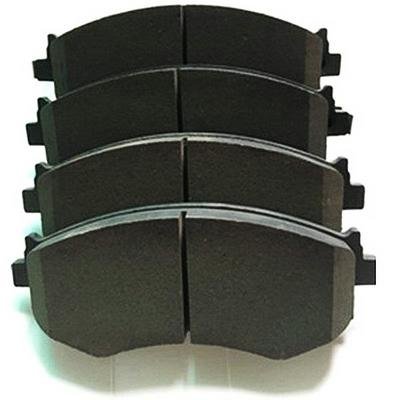
Policy Drive: Environmental Protection Regulations Reshape the Industry Pattern
The introduction of global brake particulate emission standards has become a mandatory catalyst for industry transformation. The Euro 7 standard, which takes effect in 2026, sets limits on brake particulates for the first time, with a PM10 limit of 3 mg/km for pure electric vehicles and 5 mg/km for pure electric heavy-duty trucks; China's National 7 Emission Standard is expected to be finalized by the end of 2025, focusing on the control of PM2.5, and the limit may be aligned with Euro 7. The policies have three major impacts: first, the backward production capacity is withdrawn at an accelerated pace. In 2025, the proportion of asbestos and high-metal brake pad production capacity that does not meet emission requirements will drop to less than 5% (compared with 15% in 2020); second, the technical barriers are raised. Enterprises need to invest more than 10 million euros to purchase special equipment such as emission dynamometers for compliance testing; third, regional coordination is strengthened. The European Union promotes the unification of particulate measurement standards, and Chinese car enterprises (such as Chery-Huawei and XPeng) cooperate with suppliers to prepare for the National 7 Emission Standard and lock in low-emission braking solutions.
Three Future Directions: Greenization, Intellectualization, and Servitization
Greenization: Full-Life-Cycle Low Carbon
Enterprises are extending from "reducing emissions during use" to the full life cycle of "raw materials - production - recycling" for carbon reduction. They use renewable resin binders and recycled steel back materials, aiming to reduce the full-life-cycle carbon emissions of brake pads by 50% by 2030, in line with the global "dual carbon" trend.
Intellectualization: In-depth Integration with Autonomous Driving
The EMB system will become a standard configuration. Brake pads will be integrated with pressure sensors and temperature sensors to realize an intelligent closed loop of "state prediction - active adjustment - fault alarm". By 2028, the penetration rate of intelligent brake pads in models equipped with L4-level autonomous driving is expected to reach 100%, meeting the high requirements of intelligent driving for braking safety and accuracy.
Servitization: Digital Transformation of the Aftermarket
Leading enterprises build customer portraits through CRM systems and provide integrated services of "accurate reminder - on-site replacement - used parts recycling". Enterprises such as Tenneco are piloting the "brake pad subscription system", where users pay according to the driving mileage, improving customer stickiness and promoting the transformation of the aftermarket from "product sales" to "service value-added".


