

Brake Pads 101 — What Your Factory Supplier Needs You to Know About Materials and Selection
Choosing the right brake pad isn't just about price. Whether you're a distributor building an inventory, a fleet operator managing thousands of vehicles, or an importer sourcing for local retailers, understanding brake pad materials is essential. Here's what a professional brake pad factory wants you to know.
The Four Main Brake Pad Materials - And Their Trade-Offs
Modern brake pads have come a long way from the asbestos-based materials that dominated until the 1980s. Today, the market relies on three primary material types, each with distinct performance characteristics:
1. Non-Asbestos Organic (NAO) - Made from a blend of organic fibers, resins, and fillers. NAO pads offer quiet operation, gentle rotor wear, and moderate stopping power. They're ideal for daily driving and light performance applications, but they may not withstand extreme heat as effectively as other types.
2. Semi-Metallic - Containing 30% to 70% metal content (copper, iron, steel, and other alloys), these pads deliver superior stopping power, especially in high-heat and heavy-load conditions. They're the go-to choice for trucks, SUVs, and performance vehicles. However, they can produce more noise and accelerate rotor wear compared to ceramics.
3. Ceramic - Engineered with ceramic fibers and copper-free formulations in response to tightening environmental regulations. Ceramic pads are exceptionally quiet, produce minimal brake dust, and are gentle on rotors - making them perfect for luxury sedans and daily commuters. The trade-off: higher upfront cost and slightly less aggressive initial bite under extreme conditions.
4. Low-Metallic NAO - A hybrid category that blends organic materials with a small percentage (typically 10–15%) of metal additives to boost friction performance while maintaining some of the quiet characteristics of NAO pads.
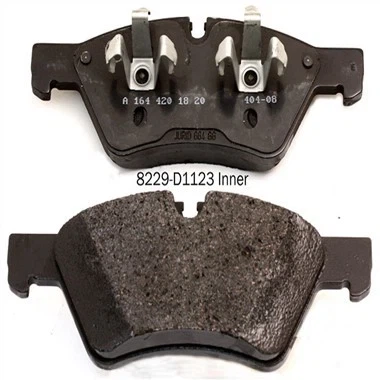
Coefficient of Friction - The Number That Matters
Regardless of material type, all quality brake pads maintain a coefficient of friction (COF) between 0.35 and 0.50 under varied thermal and mechanical loads. A well-formulated pad will keep its COF stable across a wide temperature range - typically from ambient temperature up to 500–800°C - without "fading" (loss of braking efficiency due to overheating).
What Quality-Conscious Buyers Should Ask Their Factory Supplier
When sourcing brake pads from a factory, don't just ask for a price list. Request documentation on:
· Friction coefficient data across temperature ranges - Does the pad maintain stability from cold starts to high-heat emergency stops?
· Wear rate testing - Lower wear means longer product life and happier end customers.
· Dynamometer test results - Independent validation of fade resistance and overall performance.
· Regulatory compliance certificates - ECE R90 for European markets, FMVSS for North America, and copper-free verification for California.
· NVH (Noise, Vibration, Harshness) analysis - A quality factory will test for noise suppression and provide data.
Quality Certifications Your Factory Should Hold
Leading brake pad factories operate under IATF 16949 quality management systems, which govern automotive supplier production standards. Combined with ISO 9001 certification, these frameworks ensure consistent quality, traceability, and continuous improvement. Ask your supplier to share their certification documents - reputable factories will be proud to provide them.
The Bottom Line
Brake pads are safety-critical components. The difference between a quality pad and an inferior one can mean the difference between a safe stop and a collision. By understanding material types, asking the right questions, and partnering with a certified factory, buyers can build a brake pad supply chain that delivers performance, reliability, and value - all while satisfying increasingly stringent global regulations.


