

Brake Pads Explained: What Every Driver and Buyer Should Know About Factory Manufacturing
Understanding the Heart of Your Braking System
Brake pads are the critical friction components that bring your vehicle to a safe stop. When you press the brake pedal, hydraulic fluid forces pistons inside the calipers to push the brake pads against the spinning brake discs attached to your wheels. This friction converts your vehicle's kinetic energy into heat, slowing or stopping it. Over time, this repeated friction wears down the pad material, which is why periodic replacement is essential-typically every 20,000 to 50,000 kilometers, depending on driving style and component quality.
But not all brake pads are created equal. Understanding the different types-and how they are manufactured in a modern factory-can help you make informed decisions for safety, performance, and long-term value.
The Three Main Brake Pad Types
The market offers three primary categories of brake pads: semi-metallic, organic (NAO), and ceramic. Each has distinct characteristics suited to different vehicles and driving styles.
Semi-Metallic Brake Pads: The most common type, containing 30% to 70% metal alloys such as copper, steel, and iron bonded with graphite and resin. They excel in heat dissipation, offering 15% shorter stopping distances compared to organic pads and lasting 20-40% longer. Semi-metallic pads are ideal for trucks, SUVs, and performance vehicles, particularly in mountainous terrain or towing applications. Their drawbacks include noisier operation and increased rotor wear.
Ceramic Brake Pads: Developed in the 1980s, ceramic pads combine copper fibers with dense ceramic compounds for exceptionally quiet operation-up to 70% noise reduction compared to semi-metallic-and minimal brake dust. They deliver excellent and consistent braking performance even at extreme temperatures exceeding 400°C and can last 2-3 times longer than organic pads. However, ceramic pads cost 30-50% more than semi-metallic options and may have reduced cold-weather effectiveness. They are the preferred choice for luxury sedans, commuter cars, and electric vehicles where noise and cleanliness are paramount.
Organic (NAO) Brake Pads: Made from non-metallic components such as fiberglass, rubber, and Kevlar bonded with resin, organic pads are asbestos-free and environmentally friendly. They operate quietly, are gentle on brake rotors, and are highly affordable-typically 40-60% cheaper than ceramic alternatives. However, they wear out faster than both ceramic and semi-metallic pads and can experience brake fade under high heat conditions, making them less suitable for heavy vehicles or aggressive driving. These pads are best for light-duty vehicles and city commuters.
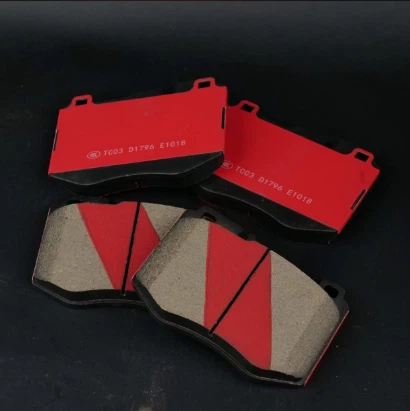
How Brake Pads Are Made in a Modern Factory
The manufacturing process of high-quality brake pads is a sophisticated, multi-stage operation that demands precision engineering. Here is how a professional brake pad factory transforms raw materials into safety-critical components:
Stage 1: Raw Material Handling and Mixing. Reinforcing fibers (aramid, steel, or ceramic), friction modifiers, fillers like barium sulfate, and rubber binders are automatically weighed and fed into high-efficiency mixing systems. Advanced mixers such as high-speed dispersers and planetary blenders ensure uniform dispersion of ingredients-essential for consistent friction performance and reduced noise.
Stage 2: Forming and Shaping. The mixed compound is shaped into semi-finished brake pad blanks using hydraulic pressure molding machines. These machines apply 100 to 300 tons of pressure to compress the mixture into molds, resulting in dense, uniform pads with excellent structural integrity and consistent friction characteristics.
Stage 3: Backing Plate Preparation. Steel backing plates are cut from coil stock using CNC punch presses or laser cutters, then cleaned and treated with surface treatments such as phosphating or sandblasting to enhance bonding. A high-strength adhesive is applied before the friction material is bonded during the molding or post-assembly phase.
Stage 4: Curing and Heat Treatment. The molded pads undergo controlled curing at elevated temperatures to develop their final mechanical properties and thermal stability.
Stage 5: Precision Finishing and Quality Control. Pads are ground to exact thickness tolerances, trimmed, surface-treated, and assembled with wear indicators and anti-noise shims. Final quality control includes friction testing, noise validation, and dimensional inspection to ensure compliance with international standards such as ECE-R90, DOT, and ISO 26867.
What Makes a High-Quality Brake Pad?
A premium brake pad should do more than just stop your car. It must efficiently dissipate heat, operate quietly, produce minimal dust, and maintain consistent braking power regardless of temperature. Quality pads also offer high durability, disc compatibility, and predictable pedal response. While cheap pads may cost less upfront, a premium set that lasts 40,000 kilometers is ultimately more cost-effective than a budget set that needs replacement every 15,000 kilometers.
Why Factory Manufacturing Matters
Choosing brake pads from a professional factory with advanced manufacturing capabilities ensures batch-to-batch consistency, regulatory compliance, and proven performance. In a market increasingly shaped by copper-free mandates, EV compatibility, and noise reduction requirements, quality manufacturing is not an option-it is a necessity. Whether you are a fleet manager, a garage owner, or an individual driver, understanding what goes into your brake pads is the first step toward safer, smarter driving.


