

Brake Pad Quality Judgment and Selection Guide
As the "last line of defense" for automotive braking safety, the quality of brake pads directly relates to the safety of drivers and passengers. Whether for new car maintenance replacement or used car repair and upgrade, it is necessary to select high-quality products through scientific judgment methods and formulate purchasing strategies based on actual needs. Specific content is divided into the following three core dimensions:
I. Quality Judgment: Three Core Identification Methods (with Pitfall Avoidance Tips)
1. Packaging and Labeling: Identify Legitimacy from the "Source"
The packaging and labeling of regular brake pads are the "first window" of enterprise quality control. Focus on verifying the following information:
Mandatory Labeled Information: The packaging must clearly print the production license number (e.g., XK13-001-XXXX), friction coefficient grade (e.g., FF grade, FE grade, corresponding to different braking performances), execution standard (domestic standard: GB 5763-2018 Automotive Brake Linings; export products must comply with international standards such as ECE R90 and SAE J2707), and full enterprise name and Logo. None of these can be missing.
Internal Supporting Documents: The packaging box must be accompanied by a product qualification certificate (marking inspector number and qualification result), production batch number and production date (facilitating quality problem traceability). Some high-end brands also provide installation instructions and warranty cards (warranty period is usually 1-2 years).
Pitfall Avoidance Tip: If the packaging printing is blurry, there is no production license number, or only "universal type" and "suitable for multiple vehicle models" are marked without specific parameters, it is likely an "unqualified product" (lacking production, inspection, and quality certificates). Such products may have problems like unqualified friction coefficients and poor high-temperature resistance, so they must not be purchased.
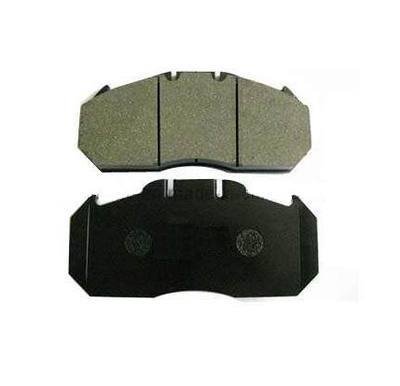
2. Appearance and Texture: Check Defects by "Senses"
The production process and material quality of brake pads can be intuitively judged through vision and touch. Focus on the following details:
Visual Inspection: High-quality brake pads have uniform surface color (semi-metallic materials are dark gray, ceramic materials are light gray), with no cracks, slag falling, bubbles, or other defects on the friction layer; the non-friction surface (steel back) has uniform spraying, no missing spraying or sagging, and is pressed with the enterprise Logo or model mark (authenticity can be verified through the official website); the grooves (for heat dissipation and dust discharge) have consistent depth, smooth edges, and no burrs or deformation.
Tactile Inspection: Touch the friction layer with hands-high-quality products have a delicate feel without granularity, and no obvious depression when pressed (indicating high material density); the edges of the steel back have no sharp burrs to avoid scratching hands or brake pipelines during installation.
Comparison Reference: Inferior brake pads are mostly "cutting corners" products. Common problems include uneven friction layer thickness (the thinnest part is only 3mm, while normal new products should be ≥10mm), rusted or unmarked steel backs, and shallow, irregular grooves. Such products are prone to braking noise and rapid wear.
3. Core Parameters: Verify Performance by "Data"
The key performance of brake pads is determined by parameters. Focus on the friction coefficient and operating temperature to avoid being misled by "false propaganda":
Friction Coefficient: According to SAE standards, the friction coefficient of passenger car brake pads is divided into three grades-Grade E (0.20-0.35, low friction coefficient, mostly used for light trucks), Grade F (0.35-0.45, medium friction coefficient, suitable for mainstream family cars), and Grade G (0.45-0.55, high friction coefficient, suitable for high-performance cars). Family cars should prioritize Grade FF (cold friction coefficient 0.35-0.45, hot friction coefficient 0.35-0.45), which balances braking effect and comfort; if "friction coefficient ≥0.6" is marked without an authoritative test report, it may be an exaggeration, and excessive brake disc wear may occur in actual use.
Operating Temperature: The suitable operating temperature for regular family car brake pads is 100-350℃, and the friction coefficient attenuation range at high temperatures must be ≤25% (exceeding this range may cause "thermal fading" and lead to braking failure). When purchasing, you can ask the merchant to provide a third-party test report (e.g., a report issued by the National Automobile Parts Quality Supervision and Inspection Center), and focus on checking the friction coefficient data at four temperature points ("100℃, 200℃, 300℃, 400℃") to ensure no significant fluctuations.
Material Composition: The material type can be auxiliary judged through the parameter table. For example, semi-metallic brake pads will be marked with "metal fiber content 30%-50%", and ceramic brake pads with "ceramic fiber content ≥20%". Avoid merchants passing off "semi-metallic materials as ceramic materials" (the price of ceramic materials is about twice that of semi-metallic materials, and they can be distinguished by weight-ceramic materials are lighter under the same size).
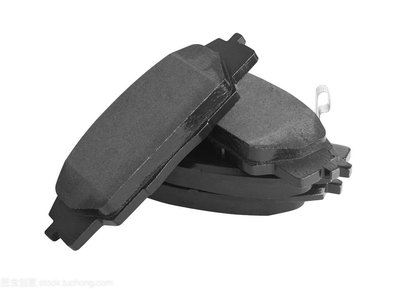
II. Purchasing Strategy: Four Practical Principles (Adapting to Different Scenarios)
1. Scenario Priority: Choose Materials Based on "Vehicle Usage Needs"
Different material brake pads have significant performance differences. They should be selected based on daily vehicle usage scenarios to avoid "blindly pursuing high-end" or "coveting low prices":
Urban Family Commuting (annual mileage 10,000-15,000 km): Prioritize NAO (non-asbestos organic) brake pads or semi-metallic brake pads. NAO materials have good mute effect (braking noise ≤55 decibels) and low wear on brake discs (annual wear ≤2mm), suitable for frequent braking in congested road conditions; semi-metallic materials have stronger wear resistance (service life about 60,000-80,000 km) and high cost-effectiveness, suitable for users with limited budgets.
Mid-to-high-end Vehicles/Pursuing Quality (focusing on mute and low dust): Choose ceramic brake pads. They have excellent heat dissipation (high-temperature stability up to 800-900℃, no thermal fading during continuous braking), and dust emission is only 1/5 of that of semi-metallic materials (wheel hubs are not easy to get dirty), with no braking noise. They are suitable for mid-to-high-end models such as Mercedes-Benz, BMW, and Audi, with a service life of 80,000-100,000 km.
High-performance Vehicles/Race Track Driving (high-frequency and high-intensity braking): Choose carbon fiber brake pads or powder metallurgy brake pads. Carbon fiber materials can withstand high temperatures above 1200℃ and have stable friction coefficients (high-temperature attenuation ≤15%), suitable for racing cars or modified cars; powder metallurgy materials have strong wear resistance (service life is 3 times that of ordinary materials), but low low-temperature friction coefficients (preheating is required when ≤0℃), more suitable for heavy machinery or race track scenarios.
Heavy-duty Vehicles (trucks, SUV towing): Choose special brake linings for heavy-duty vehicles (mainly metal-based materials). Their steel back thickness reaches 5-8mm (3-4mm for ordinary passenger cars), and the friction layer is added with wear-resistant particles (such as silicon carbide), which can withstand high-load braking (single braking load up to more than 5000N) to avoid friction layer falling off during braking.
2. Regular Channels: Avoid Counterfeits from the "Source"
Counterfeit brake pads are mostly circulated in irregular channels. When purchasing, recognize the following reliable channels to reduce risks:
Official Authorized Channels: 4S stores (providing original brake pads with guaranteed quality, but higher prices, about 1.5-2 times the market average price), brand authorized dealers (e.g., offline stores of brands such as Bosch, Ferodo, and Gold 麒麟;authorized qualifications can be queried through the official website).
Regular E-commerce Platforms: JD Mall Self-operated, Tmall Official Flagship Stores. Such platforms conduct qualification reviews on settled merchants and provide "fake one compensate ten" guarantees; avoid purchasing from third-party stores with "no brand and low sales volume", as these stores mostly sell "OEM products" with no quality guarantee.
Pitfall Avoidance Tip: Be alert to "original disassembled parts" and "foreign trade surplus products" with "low-price promotions". Such products are mostly refurbished parts (friction layers are re-adhered and easy to fall off) or expired products (rubber accessories are aging, affecting sealing), which may cause braking delay and noise during use.
3. Supporting Inspection: Ensure Braking Safety through "Linkage"
Brake pads do not work independently; they need to cooperate with brake discs, brake fluid, and brake pipelines. When purchasing, synchronously inspect the following components to avoid safety hazards caused by "single replacement":
Brake Disc Inspection: If there are deep grooves (depth ≥1.5mm), uneven wear (thickness difference ≥0.5mm), or cracks on the brake disc surface, it is necessary to replace the brake disc synchronously with the brake pads. Otherwise, the new brake pads will cause braking noise and rapid wear due to uneven contact; the service life of normal brake discs is about 2-3 sets of brake pads. If used for more than 80,000 km, it is recommended to replace them even if there are no obvious defects in appearance.
Brake Fluid Inspection: Brake fluid is hygroscopic. After more than 2 years or 40,000 km of use, the water content will exceed 3% (detectable by a brake fluid detector), leading to a decrease in boiling point (easy to generate bubbles and cause "vapor lock", resulting in braking failure). It needs to be replaced synchronously (it is recommended to choose DOT4 or DOT5.1 grade brake fluid, suitable for most family cars).
Brake Pipeline Inspection: Check whether the pipeline has aging, cracking, or leakage (especially at the joints). If brake fluid leakage is found, the pipeline must be repaired before replacing the brake pads to avoid insufficient braking pressure.
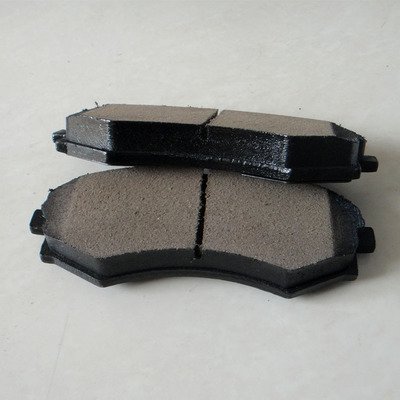
4. Brand Adaptation: "Accurately" Match Vehicle Models
The brake system design of different vehicle models is different. Brake pads need to "accurately match" the vehicle model to avoid adaptation problems caused by "universal type":
Vehicle Model Query: Through the "Vehicle Identification Number (VIN)" on the vehicle registration certificate, query the suitable brake pad model on the brand official website or accessory platform (e.g., Tuhu Car Maintenance, JD Auto Service) to ensure that the size (steel back length, width, thickness) and installation hole position are consistent with the original vehicle.
Avoid "Universal Type": Some merchants promote "universal brake pads", claiming to be "suitable for all vehicle models". Such products are mostly "forced adaptation" (e.g., modifying installation holes, reducing friction layer area). After installation, they may cause brake jamming, noise, or even failure to brake normally.
III. Replacement and Maintenance: Ensure Performance "Timely"
Brake pads need regular inspection and replacement to avoid safety accidents caused by "excessive wear". Specific nodes are as follows:
1. Replacement Nodes: Judge by "Thickness" and "Prompt"
Thickness Monitoring: The friction layer thickness of new brake pads is about 10-15mm. When worn to 3-5mm (observable through tire gaps or measurable with a caliper), they need to be replaced in time; some brake pads are equipped with "wear warning plates" (metal sheets). When the friction layer is worn to the position of the warning plate, a "sharp noise" will be emitted during braking. At this time, replacement is mandatory (if continued use, the warning plate will wear the brake disc, increasing maintenance costs).
Cycle Reference: The service life of brake pads varies greatly with different materials and vehicle usage scenarios-NAO materials last about 40,000-60,000 km, semi-metallic materials about 60,000-80,000 km, and ceramic materials about 80,000-100,000 km; frequent braking in congested urban road conditions will shorten the service life (by about 20%), while high-speed road conditions (low braking frequency) will extend the service life (by about 10%).
2. Daily Maintenance: Extend Service Life through "Details"
Avoid "Emergency Braking": Frequent emergency braking will cause the brake pad temperature to rise sharply (reaching above 600℃ instantly), accelerating friction layer wear and easily causing thermal fading; maintain a safe following distance during daily driving and use the "point braking" method to brake, which can extend the brake pad service life by about 30%.
Regular Cleaning: Every six months or 10,000 km, use compressed air to blow off dust between brake pads and brake discs (avoiding brake noise caused by dust accumulation); if driving in muddy and dusty road conditions for a long time, remove the tires to clean debris (such as small stones) in the friction layer grooves to avoid scratching the friction layer.
Avoid "Overloading": Vehicle overloading will increase braking load, accelerating brake pad wear (e.g., a 5-seat car fully loaded with 5 people and heavy loads will reduce the brake pad service life by 15%). Avoid overloading during daily vehicle use, especially during long-distance driving.


