

Brake Pads: Core Knowledge, Selection, and Maintenance Guide
I. Core Mission of Brake Pads: More Than "Deceleration"-It's Life Protection
As the core component of a car's braking system, brake pads are hailed as "the last line of defense for mobile safety." Their essence lies in converting the vehicle's kinetic energy into thermal energy through friction to ultimately achieve deceleration or stopping. A passenger car traveling at 100 km/h must endure enormous impact forces on its brake pads during full braking-their performance directly determines braking distance, stability, and even the safety of drivers and passengers. Data shows that over 30% of traffic accidents are related to braking system failures, with excessive brake pad wear being one of the primary causes. Therefore, understanding key knowledge about brake pads is a must for every car owner.
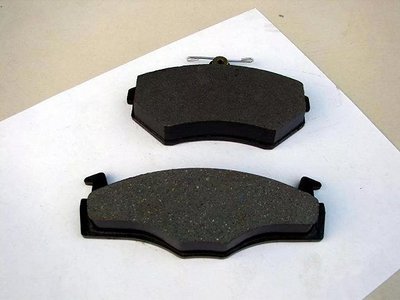
II. Material Determines Performance: Three Main Types of Brake Pads-How to Choose?
Currently, brake pads on the market are mainly categorized into three types. Material differences directly affect braking effect, service life, and application scenarios, allowing car owners to make precise choices based on their needs:
Resin-based Brake Pads (Organic Pads): Made of resin as a binder mixed with fibers, graphite, and other materials, these are the most commonly used type for family cars. Advantages include low noise, minimal dust, affordability, and low wear on brake discs, making them suitable for urban commuting. Disadvantages: Average high-temperature resistance; prone to thermal fade (temporary performance degradation) during continuous high-intensity braking (e.g., long downhill slopes).
Semi-metallic Brake Pads: Added with metal fibers such as iron and copper, these offer significantly improved high-temperature resistance and thermal conductivity, stable braking performance, and longer service life than resin-based pads. Ideal for vehicles frequently driving on highways, mountain roads, or carrying heavy loads. Disadvantages: Higher braking noise; metal dust generated may adhere to wheel hubs (requiring regular cleaning); slightly greater wear on brake discs compared to resin-based pads.
Ceramic Brake Pads: The preferred choice for high-end models, featuring ceramic fibers and ceramic powder as core materials. They combine the advantages of the previous two types-extreme high-temperature resistance (withstanding over 800℃), negligible thermal fade, ultra-low noise, and almost no dust, along with the longest service life. The only drawback is the higher price, making them suitable for car owners with high requirements for braking performance and comfort.
III. Working Principle: The "Energy Conversion Magic" Behind Friction
Many people think brake pads rely on "hard-on-hard grinding," but there's a sophisticated physical mechanism at work: When the brake pedal is pressed, the hydraulic system pushes the brake pad linings to firmly press against the rotating brake disc. At this point, the enormous friction generated between the linings and the disc rapidly converts the vehicle's kinetic energy into thermal energy. This heat is dissipated into the air through the cooling structures of the brake disc and pads, while the vehicle gradually decelerates to a stop under the action of friction. Notably, high-quality brake pads optimize the friction material formula to reduce thermal fade, ensuring stable braking performance even during continuous braking.
IV. Must-Know! 4 Signs Your Brake Pads Need Replacement
Brake pads are consumables and must be replaced promptly when worn to a certain extent, otherwise braking safety will be seriously compromised. Watch for these 4 signs:
Wear Limit Alarm: Brake pads are equipped with wear limit sensors. When the lining thickness is less than 3mm, the sensor triggers a warning light on the dashboard (usually a red "BRAKE" indicator)-replace immediately.
Abnormal Braking Noise: A squeaking or sharp metallic scraping sound during braking likely indicates the lining has worn to the limit, causing the metal base to contact the brake disc-urgently inspect and replace.
Deteriorated Braking Performance: A longer brake pedal travel, significantly increased braking distance, or vehicle drift during braking may be due to uneven pad wear or aging friction material-inspect promptly.
Visual Wear Check: After removing the wheel, directly observe the lining thickness. If it's less than 3mm, or if the lining surface has cracks or peeling, replace the brake pads.

V. Daily Maintenance: 3 Tips to Extend Brake Pad Life
Avoid Frequent Hard Braking: Frequent hard braking subjects brake pads to enormous instantaneous pressure and heat, accelerating wear. Drive smoothly, anticipate road conditions in advance, and minimize hard braking.
Regular Cleaning and Heat Dissipation: Periodically clean dust and debris from wheel hubs and brake discs to prevent accumulation that hinders heat dissipation. Meanwhile, check for scratches or deformation on the brake disc surface-repair or replace if abnormal to avoid exacerbating pad wear.
Avoid Overloading and High-Temperature Environments: Overloading increases the burden on the braking system, accelerating pad wear. When driving in high-temperature environments for extended periods (e.g., long downhill slopes in summer), use intermittent braking to prevent overheating and performance degradation of brake pads.


