

Solving the Low-Temperature Braking Difficulty of Ceramic Brake Pads: From Principles to Practical Solutions
Ceramic brake pads have become the first choice for many car owners due to their advantages of low noise, low dust, and wear resistance. However, their shortcoming of "poor braking performance at low temperatures" often leaves car owners facing the trouble of braking lag in winter or low-temperature environments. To solve this problem, it is necessary to first understand the underlying principles, and then comprehensively improve the low-temperature braking performance through targeted hardware adjustments, driving habit optimization, and maintenance strategies.
I. First, Understand: Why Do Ceramic Brake Pads Perform Poorly at Low Temperatures?
The poor low-temperature braking performance of ceramic brake pads stems from the interaction between their material properties and the low-temperature environment, rather than product quality issues:
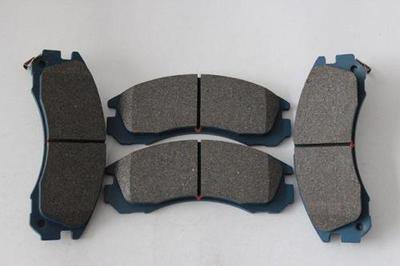
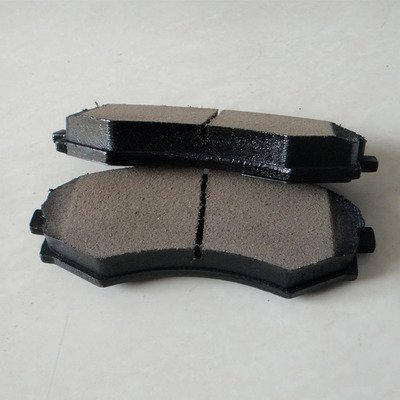
High Activation Temperature of Friction Material: The friction material of ceramic brake pads is mainly composed of ceramic fibers, metal powders, etc. This type of material needs to reach a certain temperature (usually 50-80℃) to be fully activated for optimal friction performance. In a low-temperature environment, the material is not "warmed up", and the friction coefficient is 20%-30% lower than that at room temperature, resulting in slower braking response.
Easy Formation of a "Barrier Layer" on the Surface at Low Temperatures: When parked outdoors in winter, the surface of the brake pads may be covered with condensed water, frost, or slight rust. During braking, these substances form a "lubricating layer" between the brake pads and the brake disc, further reducing friction and causing a "soft brake pedal and insufficient braking force" sensation.
Low-Temperature Response Lag of the Braking System: Low temperatures increase the viscosity of brake fluid and cause the shrinkage of the brake caliper seal rings, slowing down the transmission speed of braking force. Even if the brake pads perform normally, car owners may feel a decrease in braking effect due to "braking force transmission delay".
II. Core Solutions: Comprehensively Improve Low-Temperature Braking from Hardware to Habits
To address the above issues, the low-temperature shortcomings of ceramic brake pads can be effectively compensated for through three dimensions-"hardware upgrade and optimization matching", "driving habit adjustment", and "daily maintenance enhancement"-without replacing the type of brake pads (thus retaining their advantages of low noise and low dust).
(I) Hardware Upgrade: Fundamentally Improve Low-Temperature Adaptability
Hardware adjustment is the most direct way to solve poor low-temperature braking, focusing on forming a "low-temperature cooperative loop" among the brake pads, brake disc, and brake fluid. The following are 3 specific actionable steps:
Replace with "Low-Temperature Optimized" Ceramic Brake Pads
Ceramic brake pads are not a "one-size-fits-all" product. Some brands launch "low-temperature high-friction coefficient" versions (usually marked with "low-temperature adaptive" or "friction coefficient μ≥0.4 (-10℃ to 100℃)" on the packaging). By adjusting the proportion of ceramic fibers (increasing ultra-fine ceramic particles) and adding low-temperature active ingredients (such as graphite modifiers), these brake pads can reduce the activation temperature of the friction material to 30-40℃, improving the low-temperature braking response speed by approximately 30%.
Purchasing Tip: Prioritize brands that match the original braking system of the vehicle (such as Bosch, Ferodo, TRW, etc.) to avoid braking deviation caused by mismatched sizes or friction coefficients.
Optimize the Brake Disc Condition to Reduce the Impact of the "Barrier Layer"
The flatness and surface condition of the brake disc directly affect the friction efficiency at low temperatures:
If the brake disc has been used for more than 20,000 kilometers and has obvious grooves (depth exceeding 0.5mm), rust, or uneven wear, it is recommended to perform a "disc skimming" process (professional machine tool grinding of the surface) to restore the flatness of the disc surface and reduce the contact gap with the brake pads;
When replacing with new brake pads, prioritize matching with "drilled ventilated discs" (if supported by the original vehicle). The ventilation holes of such brake discs can accelerate the evaporation of water vapor at low temperatures and help the brake pads heat up quickly, improving the low-temperature braking effect by approximately 25% compared with ordinary solid discs.
Upgrade to Brake Fluid with Better Low-Temperature Performance
The low-temperature fluidity of brake fluid is crucial for the transmission of braking force. Ordinary DOT3 brake fluid will have a significant increase in viscosity at -20℃, while brake fluid meeting the DOT4 or DOT5.1 standard has lower low-temperature viscosity (maintaining good fluidity even at -40℃), which can reduce the delay in braking force transmission at low temperatures.
Replacement Recommendation: Replace the brake fluid every 2 years or 40,000 kilometers. During replacement, thoroughly drain the air in the system (to avoid air resistance affecting braking), and complete the replacement especially before the arrival of winter to prepare for the low-temperature environment.
(II) Driving Habit Adjustment: Proactively Adapt to Low-Temperature Characteristics
When hardware adjustments cannot be made immediately or temporarily, the following 3 simple changes in driving habits can effectively alleviate low-temperature braking lag and avoid safety hazards:
"Warm Up" After Starting: Activate the Braking System in 30 Seconds
After the vehicle is started cold, do not drive at high speed directly. Instead, drive at a low speed (10-20km/h) and gently press the brake pedal 3-5 times (each time pressing to a depth of approximately 1/3 and holding for 1-2 seconds before releasing). Through slight friction, the temperature of the brake pads and brake disc is raised to above 30℃, and the condensed water or rust on the surface is removed at the same time to activate the braking performance in advance.
Note: Avoid slamming on the brakes when the engine is cold, as this may easily cause overheating and carbonization of the brake pad surface, which instead accelerates wear.
"Advance Distance" for Braking: Leave One More Car Length Than at Room Temperature
In a low-temperature environment, the braking distance is 10%-15% longer than that at room temperature (taking 60km/h as an example, the braking distance at room temperature is approximately 15 meters, which may increase to 17-18 meters at low temperatures). When driving, it is necessary to predict the road conditions in advance. When seeing traffic lights or the vehicle in front decelerating, gently press the brake pedal 1-2 car lengths in advance to give the brake pads sufficient "heating time" and braking force build-up time, and avoid slamming on the brakes when approaching to prevent braking failure.
Avoid "High Speed with Cold Discs": Reduce Risks After Long-Term Parking
If the vehicle is parked outdoors for more than 8 hours (especially on winter nights), the brake pads and brake disc will be in a low-temperature state and may be covered with thick frost or rust. At this time, if you accelerate directly to above 60km/h, "instantaneous weakness" may occur during braking. It is recommended to drive at a low speed for 3-5 minutes first (such as in the community or open sections in the suburbs), and gradually remove surface impurities and increase the temperature of the braking system through gentle braking before accelerating normally.
(III) Maintenance Enhancement: Extend the Stability of Low-Temperature Performance
Inadequate daily maintenance will accelerate the degradation of the low-temperature performance of ceramic brake pads. Doing a good job in the following 3 maintenance tasks can maintain their low-temperature braking effect for a long time:
Regularly Clean the Brake Pad Surface to Avoid Impurity Accumulation
Every 5,000 kilometers (or after each car wash), clean the gap between the brake pads and the brake disc with a "low-pressure water gun" (the water pressure should not be too high to avoid damaging the brake pads) to remove impurities such as sediment and dust. After snow in winter, rinse in a timely manner to avoid residual snow-melting agents corroding the brake pad surface and forming a hard-to-remove "hard shell layer".
Inspect the Brake Caliper to Prevent Low-Temperature Jamming
At low temperatures, the brake caliper seal rings are prone to shrinkage and aging, resulting in unsmooth movement of the piston and affecting the transmission of braking force. It is recommended to inspect the brake caliper every 10,000 kilometers. If the caliper dust cover is damaged or there are oil leakage traces, replace the seal ring or caliper in a timely manner to ensure that the piston can move flexibly at low temperatures.
"Running-In Maintenance" of Brake Pads: Ensure Adaptation Before Using New Pads
Newly replaced ceramic brake pads need to go through a "running-in period" of 200-300 kilometers (which can be extended to 500 kilometers in a low-temperature environment). During the running-in period, avoid sudden braking and drive at a speed below 60km/h. Through gradual friction, a stable contact surface is formed between the brake pads and the brake disc, and the low-temperature braking effect will be more stable after the running-in is completed.
III. Common Misunderstandings to Avoid: These Practices Will Aggravate the Problem Instead
When solving the problem of poor low-temperature braking, many car owners fall into misunderstandings, which are not only ineffective but also may damage the braking system:
❌ Misunderstanding 1: Believing that "stepping on the brakes more can heat them up quickly" - Frequent hard braking will cause the brake pad surface to overheat and carbonize in an instant, which instead reduces the friction coefficient and worsens the low-temperature braking performance;
❌ Misunderstanding 2: Replacing with "ceramic brake pads with high metal content" - To improve low-temperature braking force, some car owners choose "ceramic brake pads" with a metal content of more than 30%. In fact, such products are close to semi-metallic brake pads, which will lose the advantages of low noise and low dust and may also accelerate the wear of the brake disc;
❌ Misunderstanding 3: Ignoring the rust on the brake disc and using it directly - When the rust on the brake disc surface is thick, forced braking will cause uneven local wear of the brake pads, forming "uneven wear". In the long run, this will lead to braking deviation and even cause the brake disc to crack.
Conclusion: The Low-Temperature Braking Problem of Ceramic Brake Pads Can Be "Comprehensively Solved"
The low-temperature shortcoming of ceramic brake pads is not unsolvable. By "selecting the right low-temperature optimized products" (hardware), "proactively adapting to low-temperature driving" (habits), and "doing a good job in targeted maintenance" (maintenance), we can not only retain their core advantages of low noise, low dust, and wear resistance but also make the low-temperature braking effect meet the safety standards of family cars. Especially before the arrival of winter, completing hardware inspections and maintenance in advance can effectively avoid low-temperature braking failures and make driving more secure.


