

The Critical Role of Friction Pads in Modern Wind Turbines
Within the massive nacelle of a wind turbine, among the gearboxes, generators, and complex control systems, lies a safety-critical component that is vital for both operation and survival: the braking system. At the heart of this system are the friction pads, specialized components whose performance directly impacts safety, maintenance costs, and overall turbine availability.

Primary Functions: More Than Just Stopping
Wind turbine brake pads serve two primary functions:
1. Parking and Maintenance Braking: The most common use is to securely hold the rotor stationary during scheduled maintenance, repairs, or when there is insufficient wind to generate power. This requires a high static friction coefficient to prevent any movement.
2. Emergency and Aerodynamic Braking: In the event of an overspeed situation-caused by a control system failure or extreme weather-the brakes act as a vital failsafe. They work in conjunction with the blade pitch system to bring the massive rotor to a controlled stop, preventing catastrophic mechanical failure.
Material Evolution and Key Properties
The demanding operating conditions of a wind turbine place immense stress on brake pads. They must perform reliably in temperature extremes, with exposure to moisture, salt (offshore), and dust, while withstanding immense pressure.
The materials have evolved significantly:
· Sintered Metal: Early and some current systems use pads made from powdered metal sintered under heat and pressure. They are very strong and handle high temperatures well but can be abrasive to the disc and prone to noise.
· Semi-Metallic: These contain a significant amount of metal (typically steel or copper) mixed with other materials. They offer a good balance of performance and cost but can still cause appreciable disc wear.
· Non-Asbestos Organic (NAO): The modern standard for many new turbines. NAO pads use a mixture of synthetic fibers, glass, rubber, and ceramics. They are engineered to be "disc-friendly," meaning they cause minimal wear to the far more expensive brake disc, while providing stable, quiet performance and excellent heat dissipation.
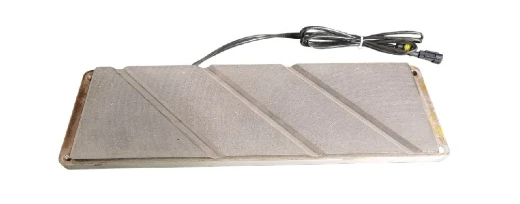
Key performance metrics for these pads include:
· Stable Friction Coefficient: The ability to provide consistent braking force across a wide range of temperatures and conditions.
· Low Wear Rate: High durability to extend service intervals, which is crucial for hard-to-access offshore turbines.
· Disc Compatibility: Minimizing wear on the brake disc to reduce total lifecycle costs.
· Noise, Vibration, and Harshness (NVH) Control: Smooth operation to prevent structural fatigue and noise pollution.
Operational and Maintenance Considerations
The shift towards advanced NAO and carbon-ceramic pads is a direct response to the industry's focus on reducing the Levelized Cost of Energy (LCOE). While the initial cost of these advanced pads may be higher, their longer service life and protection of other components lead to lower long-term operating expenses. Furthermore, the reliable performance of these friction materials is a key enabler for the move towards larger, more powerful turbines, where the safety and economic stakes have never been higher. In essence, the continuous improvement of the wind turbine brake pad is a microcosm of the wind industry's broader journey towards greater efficiency, reliability, and sustainability.


