

The Science of Stopping: A Comprehensive Guide to Brake Pad Technology and Selection
I. Friction Material Composition: A Balanced Equation
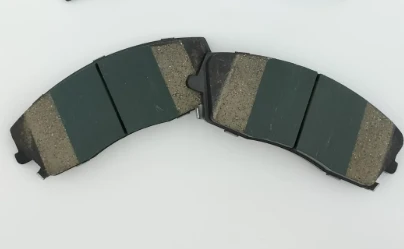
A brake pad is a complex engineered composite, not a homogeneous block. Its formulation is a precise balance of four to six key ingredient groups, each serving a distinct purpose:
1. Binder (10-25%): Typically a phenolic resin, it acts as the "glue" holding the matrix together. Its thermal stability determines the pad's resistance to fade under high temperatures. During initial use, it undergoes post-curing, establishing final strength.
2. Structural Reinforcement (15-30%): Provides mechanical integrity and can influence noise and heat management. Common types include:
· Steel Fibers: Excellent for strength and thermal conductivity; common in semi-metallic pads but can be abrasive to rotors.
· Aramid (Kevlar) Fibers: High tensile strength, helps damp vibrations to reduce noise.
· Mineral Fibers (e.g., rock wool): Cost-effective and thermally stable.
· Carbon Fibers: Used in high-performance applications for strength and thermal properties.
3. Friction Modifiers (20-35%): This is the "performance-tuning" suite.
· Abrasives (e.g., alumina, zirconia): Hard materials that maintain rotor surface texture, clean the interface, and help control the friction coefficient. They influence rotor wear rates.
· Solid Lubricants (e.g., graphite, metal sulfides): Materials that shear easily, forming a protective transfer film on the rotor. This film stabilizes friction, reduces noise, and minimizes wear on both surfaces.
4. Fillers (20-40%): Materials like barytes (barium sulfate) add volume, control cost, aid in manufacturing, and fine-tune physical properties like density and compressibility.
5. Property Modifiers (Variable %): Additives to prevent rust, reduce sintering (material clumping under extreme heat), or manage specific noise frequencies.
II. Performance Characteristics and Trade-offs
No single pad excels in all areas. Selection involves prioritizing key attributes:
· Friction Coefficient (μ): The measure of "grip." More critical than a single number is the μ-Temperature Curve, which shows how friction changes with heat. A stable curve is vital for predictable braking.
· Wear Life: The service life of the pad itself. Often inversely related to friction level and rotor wear.
· Rotor Wear: The aggressiveness of the pad on the brake disc. "Rotor-friendly" pads extend disc life.
· Noise, Vibration, and Harshness (NVH): The propensity for squeal, groan, or judder. Controlled through formulation, shims, and chamfers.
· Dust Output: The amount and color of wear debris. Low-dust formulations are a key selling point for luxury and EV markets.
III. System Compatibility and Critical Procedures
The pad's performance is entirely dependent on the health of the entire braking system:
1. Rotor Condition: New pads require a compatible rotor surface. Severely worn, warped, or heat-checked rotors must be machined or replaced to ensure proper bedding and prevent noise/vibration.
2. Brake Fluid: Old, moisture-contaminated fluid has a low boiling point and can vaporize under hard braking, causing pedal fade. Fluid should be replaced every 2-3 years.
3. Caliper and Hardware: Slider pins must move freely, and calipers must apply pressure evenly. Sticking components cause uneven pad wear and dragging.
IV. The Non-Negotiable Break-in (Bedding) Process
Bedding establishes the crucial transfer film on the rotor. A standard procedure involves:
· Making 5-8 moderate stops from 35-40 mph to 10-15 mph.
· Allowing adequate cooling between stops (no hard braking or coming to a complete stop).
· Avoiding severe braking for the next 100+ miles.
This process maximizes contact area, ensures stable friction, and prevents judder.
V. A Structured Selection Framework
1. Analyze Application: Vehicle type (weight, powertrain), primary use (commuting, towing, performance).
2. Define Driver Priority: Rank: Longevity | Low Dust | Low Noise | High Fade Resistance | Cost.
3. Match Product Family: Choose from:
· OE Replacement: Matches original balance.
· Premium Ceramic: Superior quietness, low dust, rotor-friendly.
· Performance/Sport: Higher friction, better fade resistance, often more dust/noise.
· Heavy-Duty: Optimized for sustained heat from towing/hauling.
4. Verify Specifications & Installation: Ensure correct fitment, inspect the system, and follow precise bedding instructions.
By applying this systematic knowledge, one can transform brake service from a routine maintenance task into a precise performance upgrade, ensuring optimal safety, comfort, and value tailored to the specific vehicle and driver.


