

Global Brake Pad Market 2026: Trends, Growth, And Sustainability Outlook
The global brake pad market is experiencing a transformative phase, driven by surging vehicle production, stringent safety regulations, and the rapid shift toward eco-friendly materials. Valued at USD 10.75 billion in 2025, the market is projected to grow at a CAGR of 2.6% from 2025 to 2033, reaching USD 13.2 billion by 2033. This growth is underpinned by three core drivers: rising consumer focus on road safety, the expanding automotive aftermarket, and the electrification of vehicles, which demands specialized braking solutions.
Market Dynamics: OEM vs. Aftermarket
The market is segmented into Original Equipment Manufacturer (OEM) and Aftermarket, with each segment showcasing distinct growth patterns. OEM installations account for approximately 57% of global demand, fueled by new vehicle production and mandatory safety standards. Asia-Pacific dominates the OEM landscape, contributing 45% of the global market share due to robust automotive manufacturing hubs in China, India, Japan, and South Korea. China, in particular, serves as a key production base, with major automakers expanding their brake system component supply chains to meet domestic and export demands.
The Aftermarket segment, representing 40% of the market, is driven by increasing replacement cycles and growing consumer awareness of vehicle maintenance. In North America, over 62% of passenger vehicles undergo brake pad replacement within 18–24 months, with light trucks and SUVs leading this trend. Nearly 40% of U.S. consumers now prefer ceramic brake pads for their low noise, minimal dust, and durability. Emerging markets such as Southeast Asia, the Middle East, and Latin America are witnessing rapid aftermarket growth, supported by rising vehicle ownership and expanding logistics fleets.
Material Evolution: Toward Sustainability and Performance
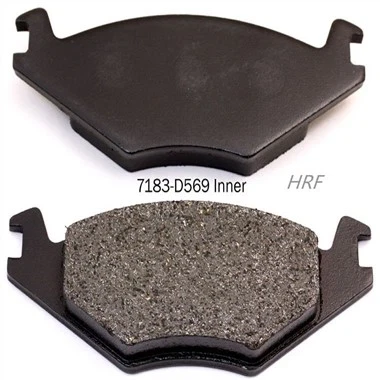
Material innovation is the cornerstone of market growth, with a clear shift away from traditional semi-metallic and asbestos-based formulations toward low-copper, non-asbestos organic (NAO), and ceramic options. Ceramic and NAO brake pads now comprise over 48% of total global demand due to their environmental benefits, stable friction performance, and compatibility with electric vehicles (EVs).
• Ceramic Brake Pads: The fastest-growing segment, ceramic pads use ceramic fibers, ceramic powder, and minimal metal content. They offer superior heat resistance (up to 800°C), low dust emissions (≤0.1g/km), and quiet operation, making them ideal for EVs and premium passenger cars. In China, ceramic pads hold a 31.7% share in the passenger car OEM market, with penetration exceeding 60% in vehicles priced above 250,000 RMB.
• NAO Brake Pads: The most widely used material, NAO pads are free of asbestos and heavy metals, offering stable friction coefficients (0.35–0.45) and low wear on brake rotors. They dominate the mid-range passenger car market, accounting for 33% of global market share.
• Low-Metallic and Semi-Metallic Pads: While still prevalent in commercial vehicles and budget segments, their market share is declining due to high dust emissions and heavy metal content. Regulatory pressures, such as the EU's copper reduction mandates, are accelerating the phase-out of high-copper formulations.
Regulatory Impacts: Global Standards Reshaping the Industry
Stringent environmental and safety regulations worldwide are driving industry-wide upgrades. The European Union's Euro 7 standard, effective for new light vehicles in November 2026, introduces the world's first brake dust limits: 3 mg/km for EVs and 7 mg/km for hybrid/combustion vehicles. This rule is spurring demand for low-emission friction materials and penalizing non-compliant products.
In the U.S., California's Green Braking Framework (GBF) and the Federal Motor Vehicle Safety Standards (FMVSS) 135 mandate reduced copper content and particulate emissions, pushing manufacturers to adopt NAO and ceramic formulations. China's GB 7258-2017 and GB/T 30512-2023 enforce non-asbestos requirements and cap copper content at 5%, aligning domestic standards with global norms. These regulations are not only improving product safety but also fostering innovation in recycled and bio-based materials.
Electric Vehicle (EV) Transition: Specialized Braking Needs
The rapid growth of EVs is creating unique opportunities and challenges for the brake pad market. EVs' heavier weight, regenerative braking systems, and reduced wear on traditional brake pads demand high-performance, thermally stable materials. Over 33% of global EVs now use specialized brake pads designed to handle regenerative braking and maintain consistent friction in stop-start driving conditions.
Key trends for EV-specific brake pads include:
• Extended Service Intervals: Pads optimized for regenerative braking can last up to 2–3 times longer than those in traditional vehicles, reducing replacement frequency.
• Lightweight Design: Materials that minimize weight to improve EV range, such as aluminum-backed pads and low-density ceramic composites.
• Low-Dust Formulations: To meet strict EV emissions standards, manufacturers are developing NAO and ceramic pads with near-zero dust output.
Competitive Landscape: Regional Players and Global Strategies
The industry is highly competitive, with global leaders like Bosch, ZF Aftermarket (TRW), Akebono, and Brembo dominating the premium OEM and aftermarket segments. However, Chinese manufacturers are gaining traction through technological advancements and cost competitiveness.
• Chinese Leaders: Companies like Jilin Jinyuan, Xinyi Technology, and Friction One are expanding globally. Jinyuan, a top exporter, holds 30% of the domestic aftermarket share and ranks among the top three globally. Xinyi Technology specializes in EV-specific braking systems, with partnerships with BYD, NIO, and XPeng driving a 41.5% year-on-year growth in its EV business. Friction One's acquisition of a Mexican production facility allows it to bypass U.S. trade barriers and tap into the North American market.
• Global Expansion Strategies: Leading manufacturers are investing in overseas R&D centers and production facilities to localize supply chains. For example, Spanish-based ICER Brakes generates 78% of its energy from renewable sources and incorporates 13% recycled materials (e.g., used tire rubber) into its pads, aligning with circular economy goals.
Future Outlook: Innovation and Sustainability
By 2033, the market will be shaped by three key trends:
1. Smart Braking Systems: Integration of sensors and wear indicators into brake pads for real-time monitoring, with predictive maintenance capabilities. Companies like Bosch are developing "intelligent pads" that transmit data to vehicle ECUs, triggering alerts when wear thresholds are met.
2. Circular Economy: Adoption of recycled materials and end-of-life recycling programs. The EU's Circular Economy Action Plan requires 25% recycled content in new vehicle brake systems by 2030, driving investment in recycling technologies.
3. Carbon Neutrality: Manufacturers are targeting net-zero emissions in production, with initiatives like renewable energy use and low-carbon manufacturing processes. Tenneco, for instance, aims to reduce manufacturing-related CO₂ emissions by 20–30% by 2030.
In conclusion, the global brake pad market is on a path of sustainable growth, fueled by safety regulations, EV adoption, and material innovation. Manufacturers that prioritize eco-friendly formulations, global compliance, and technological integration will be well-positioned to capture emerging opportunities in this dynamic industry.


