

Life Or Death in Millimeters! High-Speed Horror And Technological Innovation Unveil The Brake Pad's Guardian Code
"Boom!" A deafening crash shattered the tranquility of the highway. A brake pad weighing over five kilograms-like a runaway horse-skidded a hundred meters before bouncing up and slamming into the front windshield of Mr. Xu's new energy vehicle. The glass instantly spiderwebbed with cracks, but fortunately, it didn't shatter completely. The two occupants in the car were soaked in cold sweat. This terrifying accident on the S40 Linghe Expressway thrust the brake pad-this "safety guardian" hidden deep within the wheels-back into public view.
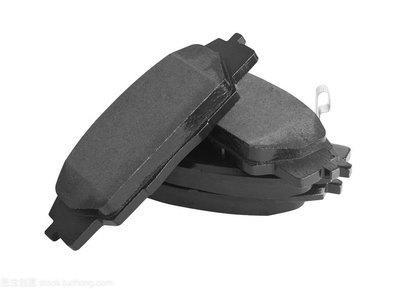
In an automobile's braking system, the brake pad is the critical player racing against death. When the driver presses the brake pedal, the hydraulic system transmits pressure in an instant. The brake pad then clamps tightly onto the brake disc like a loyal bodyguard, converting the vehicle's immense kinetic energy into heat through the powerful friction of steel against steel, fulfilling the mission of decelerating or stopping the car in milliseconds. This seemingly simple process harbors intricate precision: a high-quality brake pad must maintain a stable friction coefficient between 0.35 and 0.45, with a gap of only 0.1 to 0.3 millimeters from the brake disc-like a dancer balancing on the tip of a knife, requiring both rapid responsiveness and resistance to wear and high temperatures.
Yet, not all drivers value this "guardian." On a mountain highway in Ganzhou, Jiangxi Province, a large truck driver, relying on luck and failing to inspect the braking system regularly, suffered a sudden brake failure while turning downhill. The truck rolled over and collided with two other vehicles, causing severe damage to all three with repair costs exceeding 100,000 yuan. Data shows that among domestic truck brake failure accidents on downhill roads between 2024 and 2025, 38% stemmed from inadequate vehicle maintenance-with excessive brake pad wear and aging failure as the primary causes. More dangerously, when a brake pad's thickness drops below 3 millimeters, a metal warning tab emits a high-pitched "whistling" sound. Ignoring this "distress signal" can lead to catastrophic consequences: a worn-through brake disc and complete brake failure.
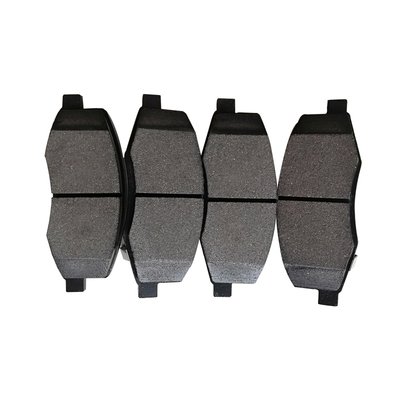
As accident warnings ring out, brake pad technology is undergoing a green revolution. At the 2025 Shanghai Auto Show, Brembo's Greentell Kit won the "Top 100 New China Automotive Supply Chain" award for its innovative "green + intelligent" concept. This system-comprising a new-generation brake disc and brake pads-adopts double-layer nickel-free coating and laser metal deposition technology. It not only reduces brake disc wear by 80% but also cuts brake dust emissions by 90%, meeting the requirements of the Euro 7 emission regulations that take effect in 2026 ahead of schedule. The humanized Easy Check indicator on the brake disc further simplifies maintenance: when the pattern fades, it signals the need for replacement, allowing car owners to easily monitor maintenance timelines.
From the heart-stopping moments on the highway to technological breakthroughs in laboratories, every upgrade of the brake pad strengthens the line of defense protecting lives. Traffic police departments remind drivers to thoroughly inspect their vehicles' safety performance before departure. Any abnormalities-such as brake noise or a soft pedal-must be addressed immediately. During routine maintenance, regular checks of brake pad thickness are essential to avoid tragedies caused by the reckless mentality of "making do." This tiny brake pad, measuring just a few millimeters, is not only a "firewall" against danger but also a microcosm of the automotive industry's green transformation. Only by valuing its maintenance and upgrading can every journey be safer and more reassuring.


