

Frequent Market Dynamics Of Brake Pads in Multiple Regions: Consumers Need To Be Alert To Quality Risks And Pay Attention To New Industry Trends
Recently, in addition to Shanghai, many other regions in China have also successively carried out quality supervision and inspection work on automotive brake pad products. At the same time, the hidden dangers of inferior products still existing in the market and the technological innovation trends in the industry together constitute important focus areas in the current brake pad field, attracting wide attention from consumers.
Quality Inspections of Brake Pads Conducted in Multiple Provinces and Cities, with Substandard Products Detected in Some Regions
Following Shanghai's release of the inspection results of automotive brake linings, the market supervision and administration departments of Guangdong Province and Zhejiang Province have also recently announced the local quality supervision and inspection results of brake pad products. Among them, Guangdong Province inspected 42 batches of automotive brake pad products, involving production and sales enterprises in 7 cities including Guangzhou, Shenzhen and Foshan. The results showed that 3 batches of products failed to meet the standard requirements, with the main substandard item being excessive wear rate. According to inspectors, an excessively high wear rate will significantly shorten the service life of brake pads. Frequent replacements not only increase the operating cost for car owners, but also may lead to brake failures if replacements are not timely.
Zhejiang Province inspected 30 batches of brake pads produced by 28 local enterprises and found that 2 batches of products failed to meet the standard for impact strength. Failure to meet this indicator means that brake pads are prone to cracking, breaking and other problems under complex road conditions such as low temperature and bumpy roads, which seriously affects braking safety. At present, the market supervision departments of the two provinces have interviewed the manufacturers of substandard products, ordered them to rectify within a time limit, and at the same time implemented recall procedures for substandard products to effectively protect the rights and interests of consumers.
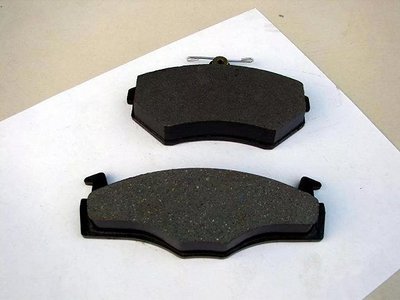
How Can Consumers Identify Inferior Brake Pads? Professionals Offer Practical Detection Methods
Faced with the potential "iron sheet brake pads" and other inferior products in the market, many consumers are worried about the quality of the brake pads of their own vehicles. For this reason, experts in the automobile maintenance industry have put forward practical identification methods. In terms of appearance, high-quality brake pads have a smooth surface, uniform color, no obvious scratches or impurities, and are clearly marked with brand, model, production date and other information; while inferior brake pads have a rough surface, may have slag falling off, and their markings are often unclear.
In terms of hand feel, when touching the surface of brake pads by hand, high-quality products feel smooth, have no granular sensation, and have moderate hardness; inferior brake pads may feel too hard or too soft, and some even have obvious metal impurities that can be felt by hand. In addition, experts suggest that consumers pay attention to the braking status during vehicle operation. If there are situations such as a significant increase in noise during braking, vibration of the brake pedal, or longer braking distance, they should promptly go to a regular maintenance institution to inspect the brake pads to avoid safety accidents caused by product quality problems. At the same time, consumers should choose regular 4S stores or authorized maintenance points to replace brake pads as much as possible, and keep purchase certificates to protect their rights in case of quality problems.
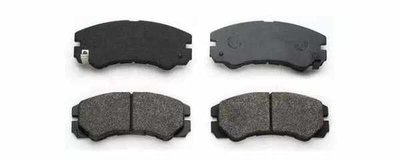
Demand for Brake Pads for New Energy Vehicles Rises, and the Industry Accelerates Technological Upgrading
With the continuous growth of the ownership of new energy vehicles, their performance requirements for brake pads have become more stringent. Compared with traditional fuel vehicles, new energy vehicles have characteristics such as large instantaneous torque and high vehicle weight, which put forward higher standards for the heat resistance and wear resistance of brake pads. Against this background, many domestic brake pad manufacturers have increased R&D investment to promote technological upgrading.
In addition to Hebei Jiatuo Friction Material Co., Ltd. obtaining the relevant patent, an auto parts enterprise in Shandong Province has also recently launched a ceramic matrix composite brake pad for new energy vehicles. This product adopts a new type of ceramic composite material, which has a stable friction coefficient and can still maintain good braking performance in high-temperature environments. Its wear rate is reduced by more than 30% compared with traditional brake pads, and it also effectively reduces braking noise, which meets the dual needs of new energy vehicles for comfort and safety. Industry insiders said that with the continuous development of new energy vehicle technology in the future, the brake pad industry will witness more technological innovations, promoting the entire industry to move towards a direction of higher quality and better performance.


