

Brake Pads: The Invisible Guardian Of Driving Safety - Don't Overlook These Details
"When I was on the highway, the car in front suddenly slowed down. When I stepped on the brake pedal, it felt like stepping into cotton, and the car just wouldn't stop. I was so scared that my palms were sweating!" Recalling the terrifying incident last month, Mr. Wang, the owner of an SUV, still felt a lingering fear. After an inspection at the repair shop, it turned out that the culprit was the brake pads, which were only 2 millimeters thick - this "safety guardian" hidden inside the wheels had long lost its protective ability due to excessive wear.
Shanghai Sampling Inspection Reveals Quality Risks, 1 Batch of Products "Fails"
Recently, the results of the 2025 quality supervision and sampling inspection of automotive brake linings in Shanghai were released. Among the 35 batches of brake pads sampled, 1 batch unfortunately "failed" the inspection. This sole unqualified batch came from physical sales channels, while all products from the production sector and e-commerce platforms passed the inspection. In terms of origin, 8 batches of products produced by local enterprises in Shanghai performed excellently, with no problems found; among the 27 batches from enterprises in other provinces and cities, 1 batch failed to pass the inspection.
Currently, this batch of unqualified products has been transferred to the relevant market supervision departments for handling. Professionals remind that although brake pads are small, they are the "heart" of the automotive braking system. If their quality is not up to standard, it may lead to disastrous consequences in emergency situations. When purchasing brake pads, consumers should choose formal channels, carefully check product labels, and avoid buying "three-no" (no manufacturer, no production date, no quality certificate) products.
New-Generation Brake Pad Technology Upgrades, Like Equipping Cars with an "Intelligent Brake Steward"
Nowadays, with the rapid development of the automotive industry, brake pads have also ushered in a "technological revolution". In the past, traditional brake pads were mainly made of metal materials, which not only produced loud noise but also easily caused wear to the brake discs. Now, new types of products such as organic brake pads, semi-metallic brake pads, and full-metallic brake pads have emerged one after another, each with its own unique advantages.
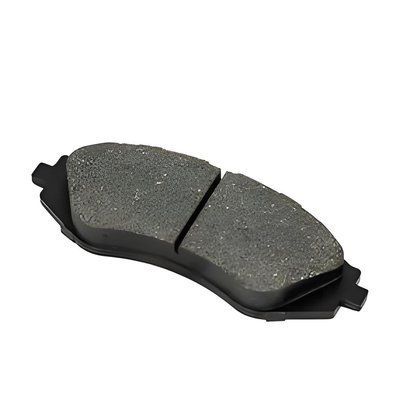
Organic brake pads are made of organic adhesives. When the brake is applied, they operate quietly and smoothly, causing little damage to the brake discs, and have gradually become the "new favorite" for family cars. Semi-metallic brake pads are like "athletes"; they can provide strong braking force during high-speed driving and have excellent thermal stability. Full-metallic brake pads are even "heavyweight players" with super wear resistance, suitable for high-speed and heavy-duty vehicles.
What's more surprising is that some new-generation brake pads are also equipped with intelligent sensors and automatic adjustment functions, just like equipping a car with an "intelligent brake steward". It can automatically adjust the braking force according to the vehicle's driving speed, road conditions, and other factors, making driving safer and more comfortable. Many automobile manufacturers have begun to adopt these advanced products to provide protection for car owners' trips.
Brake Pad Thickness Holds the "Safety Code" - Be Alert to These Signals
"Many car owners think that brake pads don't need to be replaced as long as they haven't reached a certain mileage. This is actually a misunderstanding," explained Master Li, who has 10 years of maintenance experience. He once encountered a car owner who often drove on highways; the vehicle had traveled 130,000 kilometers, but the brake pads were still in normal use. However, there were also car owners who commuted daily in congested road sections, and their brake pads reached the wear limit in less than 20,000 kilometers.
In fact, the thickness of the brake pads is the key "safety code" for determining whether they need to be replaced. The thickness of new brake pads is usually around 10 millimeters, and when they are worn down to 3 millimeters, they must be replaced immediately. Master Li gave an example: "If the thickness of the brake pads is only 2 millimeters, the braking distance may increase by more than 20% during emergency braking. This is a fatal gap on the highway."
So, how can non-professionals check the thickness of brake pads? It's actually very simple. You just need to look through the gaps in the wheel hub. Normal brake pads are black blocks; if you can see the metal base plate or the thickness is less than the pad of your finger, it means it's time to replace them. If the wheel hub is designed to be tight, you can use a mobile phone flashlight to shine through the ventilation holes to see the internal situation clearly.
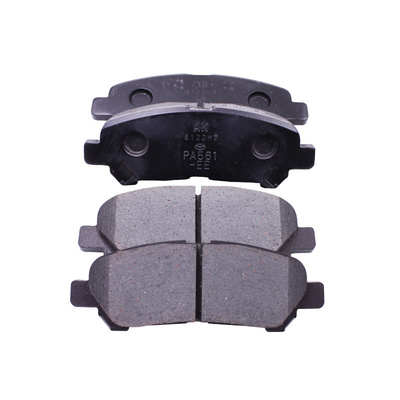
In addition, the "distress signals" from the braking system should not be ignored. When you hear a continuous metal friction sound when applying the brakes, or feel that the brake pedal stroke has become longer, or the vehicle deviates, these may be signs of excessive wear of the brake pads. If there are circular grooves on the brake disc or the steering wheel shakes during braking, it means the brake pads have damaged the disc, and both the brake disc and brake pads need to be replaced simultaneously; otherwise, the braking effect will be affected.
It is worth noting that brake pads will age even if they are not used for a long time. Data from testing institutions shows that for brake pads stored for more than 5 years, the incidence of braking noise increases by 40%, and the braking efficiency decreases by about 15%. Therefore, for vehicles with an annual driving mileage of less than 5,000 kilometers, it is recommended to conduct a professional inspection every two years to keep this "invisible guardian" in the best condition at all times.
There is no trivial matter when it comes to driving safety. Although brake pads are inconspicuous, they are an important line of defense for protecting lives. Regular inspections and timely replacements can ensure that every trip is safe and worry-free.


