

Silent Stops, Cleaner Roads — How One Brake Pad Factory Is Winning The Euro 7 Race
Published: April 2026
JINAN, China – With just months to go before Europe's Euro 7 emissions regulations take effect, the global brake pad industry is undergoing its most significant transformation in decades. For the first time, regulators are capping brake-generated particulate matter, and one Chinese brake pad factory has already positioned itself ahead of the curve.
The countdown is real. From November 29, 2026, newly type-approved passenger vehicles and light commercial vehicles across Europe must meet strict limits on brake pad and disc abrasion [3†L5-L9]. Passenger vehicles face caps of 3 to 7 mg of brake dust per kilometer, while light commercial vehicles must comply with 5 to 11 mg/km [3†L16-L18]. By November 2027, every new vehicle sold in Europe must meet these standards. This is no longer a distant regulatory horizon - it is an immediate operational reality for every brake pad factory serving global markets. The regulations extend beyond tailpipe emissions for the first time, placing brakes under the same microscope as engines [3†L22-L27].
For Shandong Huairuifeng Machinery Co., Ltd., a dedicated brake pad factory with over 15 years of friction technology experience, the Euro 7 timeline has been a strategic catalyst rather than a compliance burden. The company's recently launched EcoSilent series represents the culmination of an 18-month R&D effort to reformulate its ceramic-NAO hybrid compound [9†L14-L16]. The result is a copper-free brake pad that reduces airborne particulate matter by nearly 70 percent compared to standard aftermarket pads, while delivering stable stopping power across all temperature ranges [9†L16-L18].
The significance of copper-free formulation cannot be overstated. Traditional brake pads have long contained copper - a material that, when released as dust, is highly toxic to aquatic life. Rain washes this fine black dust into waterways, creating environmental damage that regulators have finally decided to address at the source [11†L11-L13]. What was once an industry standard has become an environmental liability. The EcoSilent series removes 100 percent of copper and other heavy metals, replacing them with a proprietary blend of mineral fibers and high-temperature ceramic binders [9†L19-L20].
The shift is not happening in isolation. Across the global brake pad market, copper-free formulations have rapidly gained ground, with ceramic-based copper-free brake pads surging from 35 percent market share in 2023 to 52 percent in 2025 [8†L24-L26]. This trajectory is accelerating as major markets tighten their environmental thresholds. California's Copper-Free Brake Initiative and similar regulations in Washington State have already set the stage, mandating that brake pads contain less than 0.5 percent copper by weight - a threshold widely considered "copper-free" by regulatory agencies [28†L30-L32].
But regulatory compliance alone does not win customers. Noise, vibration, and harshness (NVH) performance remains a top priority for drivers, and this is where the EcoSilent series distinguishes itself. Each brake pad leaves the factory fitted with a factory-attached multi-layer noise-damping shim and precision-ground chamfers [9†L23-L25]. Independent dynamometer testing confirmed noise levels below 70 decibels in 98 percent of braking scenarios - a result that exceeds many premium OE specifications [9†L28-L30].
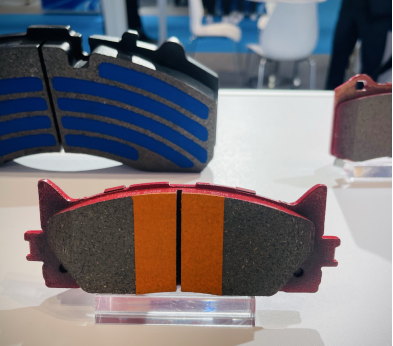
The EV factor adds another layer of complexity. Electric vehicles, with their regenerative braking systems, use mechanical brakes far less frequently than conventional cars. This creates unique challenges: less frequent use leads to rust buildup on rotors and uneven pad wear [11†L21-L23]. The EcoSilent series addresses this with a scorched surface layer that conditions the rotor immediately, eliminating the traditional "bedding-in" period and ensuring consistent performance from the very first brake application [11†L23-L24].
To support the new product line, the brake pad factory has completed a $1.5 million upgrade to its production facility, including automated mixing stations to prevent cross-contamination and a dedicated 100-ton servo press for the EcoSilent series [9†L32-L34]. Annual capacity now stands at 5 million sets, with dedicated packaging lines serving private label customers across Europe, the Middle East, and Southeast Asia [9†L35-L36]. The factory holds ISO 9001 and IATF 16949 certifications and currently ships to more than 30 countries [9†L37-L38].
"We saw the regulation changes coming, and we decided to lead rather than follow," said Mr. Wang, General Manager of the brake pad factory. "Our distributors now have a powerful selling point - a green, quiet, and durable brake pad at a competitive price." [9†L13-L14][9†L39-L40]
Initial production covers 15 popular vehicle applications, including Toyota Corolla, Honda Civic, Volkswagen Jetta, and Hyundai Elantra [9†L42-L43]. By the third quarter of 2026, the brake pad factory expects to expand coverage to over 50 models, including light trucks and SUVs [9†L43-L45]. For EV owners, the application list already includes Tesla Model 3 and BYD Atto 3 [11†L32-L33].
Beyond Europe, North America is the next frontier. The brake pad factory plans to offer EcoSilent pads for over 80 percent of passenger cars in North America and Europe by late 2026 [11†L33-L34]. The company will showcase the new series at Automechanika Shanghai in November 2026, with free sample kits available to qualified distributors [9†L45-L47].
As the global automotive aftermarket hurtles toward a new regulatory era, the message from leading brake pad factories is clear: environmental compliance and driving performance are no longer trade-offs. They are the same requirement. And the factories that mastered this equation first will define the industry's next decade.


