

How Brake Pads Work: 3 Steps to Understand the Core Logic of Stopping by Pressing the Pedal
The fundamental principle of brake pads lies in "energy conversion" - converting the kinetic energy (forward momentum) of a moving vehicle into thermal energy through friction. This thermal energy is then naturally dissipated, ultimately achieving deceleration or stopping of the vehicle. The entire process is analogous to "pinching a spinning top to stop it," except that a car's braking system is more precise and powerful. Specifically, it can be divided into 3 key steps:
Step 1: Pedal Activation Triggers "Power Transmission" to Engage the Braking System
When you press the brake pedal, the force from your foot is transmitted through two pathways:
Hydraulic Transmission: The pedal is connected to the master cylinder, which converts the pressure from your foot into hydraulic force. This force is then transmitted to the brake calipers (acting as "power amplifiers") at all four wheels via brake fluid.
Mechanical Linkage: Some vehicle models (e.g., those with drum brakes) use mechanical structures such as pull rods and cams to transfer pedal force to the braking components.
This step is like "flipping a switch" to activate the braking system. The magnitude of the pressure directly determines the braking force - the harder you press, the greater the pressure and the more powerful the braking effect.
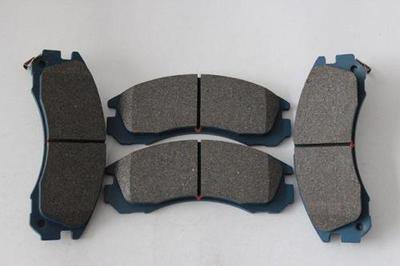
Step 2: Brake Pads "Clamp" the Brake Disc to Generate Frictional Resistance
Upon receiving hydraulic pressure, the brake calipers push the "steel backing plate" of the brake pads, forcing the "friction material layer" attached to the steel backing to firmly press against the rotating brake disc (or brake drum):
The brake disc is a metal disc that rotates with the wheel, while the brake pads are fixed to the caliper and remain stationary.
When the friction material comes into contact with the rotating brake disc, strong frictional force is generated (higher friction coefficient equals greater resistance). This frictional force opposes the rotation of the brake disc, which in turn slows down the wheels.
An important note: The heat insulation layer of the brake pads also plays a crucial role - the instantaneous high temperature (reaching several hundred degrees Celsius) generated during braking is blocked by the heat insulation layer, preventing it from transferring to the brake calipers and brake fluid. This avoids hydraulic system failure due to overheating.
Step 3: Thermal Dissipation + Momentum Fade, Vehicle Stops Smoothly
The large amount of thermal energy generated by friction does not accumulate in the brake pads or brake disc:
Brake discs are typically designed with ventilation (featuring cooling holes in the middle), allowing them to quickly dissipate heat into the air as they rotate at high speed.
The friction material of brake pads itself possesses high-temperature resistance (ceramic materials can withstand temperatures above 600℃), preventing melting or performance degradation (known as "thermal fade") due to excessive heat.
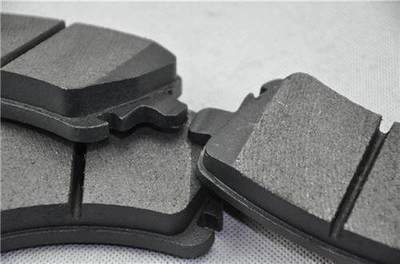
As kinetic energy is continuously converted into thermal energy and dissipated, the vehicle's forward momentum gradually fades until it comes to a smooth stop. When you release the brake pedal, the brake calipers relieve pressure, the brake pads separate from the brake disc, and the wheels resume free rotation.


