

Understanding Brake Pads – Composition, Types, Manufacturing & Maintenance
1. Core Composition: A Blend of Science
Brake pads are composite materials, typically consisting of 10-20 different ingredients bonded together under heat and pressure. These ingredients fall into several key categories:
Friction Modifiers: These are the primary materials creating the stopping power. Examples include:
Metal Fibers/Particulates: Steel, copper, iron (historically asbestos, now banned). Provide strength, thermal conductivity, and fade resistance.
Abrasives: Silica sand, alumina, magnesium oxide. Help clean the rotor surface, maintain friction levels, and combat glazing. Aggressive abrasives increase wear.
Lubricants: Graphite, molybdenum disulfide. Reduce noise and stabilize friction coefficient, especially at high temperatures. Can slightly reduce friction.
Fillers: Barytes (barium sulfate), chalk (calcium carbonate). Add bulk economically, aid in manufacturing, and influence noise/dust.
Structural Reinforcements: Aramid fibers (e.g., Kevlar), mineral fibers, glass fibers. Provide mechanical strength, prevent cracking, and reduce noise.
Binders/Resins: Primarily phenolic resins. Hold all the ingredients together as a cohesive composite. Must withstand high temperatures without degrading.
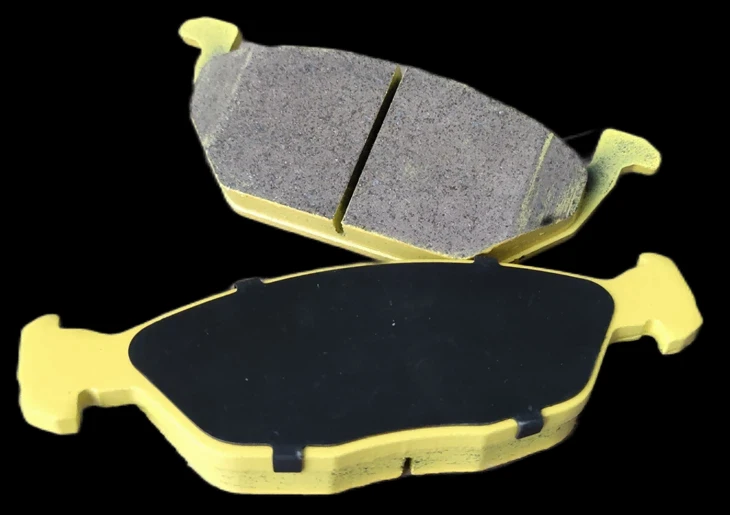
2. Major Brake Pad Types: Choosing the Right Fit
The blend of ingredients determines the pad's characteristics, leading to distinct categories:
Non-Asbestos Organic (NAO):
Composition: Primarily organic materials (glass, rubber, Kevlar, carbon) bonded with resins. May contain small amounts of metal.
Pros: Generally quietest operation, gentle on rotors, low dust, affordable.
Cons: Lower high-temperature fade resistance, faster wear rates, reduced performance under heavy stress (towing, performance driving).
Best For: Everyday driving in sedans, minivans, and light trucks under normal conditions.
Semi-Metallic:
Composition: 30-65% metal content (steel, copper, iron) mixed with fillers, lubricants, and modifiers, bound by resin.
Pros: Excellent heat dissipation, good fade resistance, durable, performs well in varied conditions. Often more affordable than ceramics.
Cons: Can be noisier (squeal potential), increased rotor wear, higher dust generation, may require higher pedal effort when cold.
Best For: Heavier vehicles (SUVs, trucks), performance-oriented driving, towing, demanding conditions. A common OE choice.
Ceramic:
Composition: Primarily ceramic fibers and compounds (like silicon carbide), non-ferrous filler materials, embedded lubricants, and binding resins. Very low or zero metal content.
Pros: Exceptionally quiet, very low dust (often cleaner wheels), smooth consistent feel, gentle on rotors, stable performance across a wide temperature range, excellent fade resistance in high-end formulations.
Cons: Highest cost, can have slightly reduced initial "cold bite" compared to semi-metallic, less effective in extreme cold without specific formulations.
Best For: Drivers prioritizing quietness, low dust, rotor longevity, and smooth performance. Popular in luxury vehicles and as a premium aftermarket upgrade. Increasingly common for EVs.
Low-Metallic & Copper-Free (NAO+):
Composition: Hybrid formulations. Low-Metallic has reduced metal content (10-30%) compared to Semi-Met. Copper-Free uses alternative materials (synthetic fibers, specific minerals) to replace copper entirely for environmental compliance.
Pros: Aim to balance performance, noise, dust, and rotor wear. Copper-Free meets regulatory mandates.
Cons: Performance characteristics vary significantly between specific formulations – research is key.
Best For: Drivers seeking a balance or needing environmentally compliant replacements.
3. The Manufacturing Process: From Mix to Mounting
Creating a consistent, high-quality brake pad involves precision:
1. Raw Material Preparation: Ingredients are precisely weighed according to the proprietary formula.
2. Mixing: Dry components are blended thoroughly, then liquid resins are added to form a homogeneous mixture.
3. Pre-forming: The mixture is often compacted into pre-forms or loose "molding compound."
4. Molding: Pre-forms/compound are loaded into heated molds under high pressure (hundreds of tons). The heat cures the resin, bonding the material. The backing plate is usually inserted into the mold simultaneously, bonding the friction material directly to it. Shims may also be attached at this stage.
5. Heat Treatment (Post-Curing): Molded pads undergo additional controlled heating to complete resin curing and optimize material properties like hardness and stability.
6. Finishing: Pads are ground to precise dimensions and tolerances. Slots and chamfers may be cut to reduce noise, aid gas escape, and remove glazing. Anti-corrosion coatings are often applied to the backing plate edges.
7. Quality Control & Testing: Rigorous checks for dimensions, bonding strength, visual defects. Samples undergo dynamometer testing to verify friction coefficient, wear, fade resistance, and noise against specifications.
8. Packaging: Pads are paired, packaged with necessary hardware (clips, shims, lubricant), and labeled.

4. Maintenance & Best Practices: Ensuring Safety and Longevity
Proper brake pad care is vital:
Regular Inspection: Visual checks (through wheel spokes) should be performed frequently. Listen for warning sounds (squealers/scrapers indicate low pads). Professional inspections during routine maintenance (e.g., oil changes) are crucial. Don't wait for noise – pads can wear unevenly.
Replacement in Axle Sets: Always replace pads on both wheels of the same axle (both front or both rear) to maintain balanced braking.
Resurface or Replace Rotors?: Machining (resurfacing) rotors is common if they are within minimum thickness specifications and have minimal runout/warping. Severely worn, warped, or scored rotors must be replaced. New pads generally perform best with fresh or properly resurfaced rotors.
Proper Bedding-In (Burnishing): After pad replacement, follow the manufacturer's bedding-in procedure. This typically involves a series of moderate stops from specific speeds (e.g., 5-10 stops from 45mph down to 10mph, allowing cooling between stops). This transfers a thin, even layer of friction material onto the rotor, optimizing contact and performance while minimizing noise and judder.
Avoid Hard Stops Initially: For the first few hundred miles, avoid panic stops or prolonged heavy braking to allow the bedding-in process to complete properly.
Use Quality Parts: Invest in reputable brands that meet or exceed OE specifications for your vehicle. Cheap, unknown brands may compromise safety, performance, and longevity.
Address Issues Promptly: Squealing, grinding, pulling, pulsation, or reduced braking performance are warnings. Have the system inspected immediately.
Conclusion
Brake pads are a sophisticated fusion of materials science and engineering, tailored to meet specific performance, environmental, and application demands. Understanding the differences between NAO, Semi-Metallic, and Ceramic pads, along with the importance of proper manufacturing, installation, and maintenance, empowers vehicle owners and technicians to make informed decisions. Choosing the right pad and caring for it correctly is fundamental to ensuring the safety, performance, and reliability of one of the vehicle's most critical systems.


