

Brake Pad Factory: Core Technologies, Production & Industry Overview
Brake pads are one of the most critical safety components in the automotive industry, and the brake pad factory determines product quality, performance consistency, and supply capacity. This article explains comprehensive industry knowledge around brake pad factories, including materials, production processes, quality control, global competition, and future development trends.
1. Friction Materials Applied in Brake Pad Factory Production
A professional brake pad factory uses four main categories of friction materials to meet different vehicle needs and market demands:
• Semi-Metallic Brake Pads
Contain 40%–60% metal fibers, with strong heat resistance and high braking stability. Widely used in commercial vehicles and entry-level passenger cars. The production cost is relatively low, but they generate more noise and dust.
• Low-Metallic Brake Pads
With 20%–40% metal content, they balance braking performance and comfort. Most mid-range family cars use this type, and it is a mainstream product in many brake pad factory production lines.
• Ceramic Brake Pads
Feature low dust, low noise, long service life, and minimal damage to brake rotors. High-end brake pad factory production focuses on ceramic formulas, especially for new energy vehicles and luxury cars.
• NAO (Non-Asbestos Organic) Brake Pads
Made of non-metallic organic materials, providing extremely quiet braking performance. Suitable for small cars and urban commuting vehicles, with relatively low heat resistance.
2. Complete Production Process in a Standard Brake Pad Factory
A formal brake pad factory follows a strict production process to ensure safety and reliability:
1. Steel Back Plate Processing: Stamping, derusting, phosphating, and spraying to improve adhesion and corrosion resistance.
2. Raw Material Mixing: Accurate proportioning of friction materials to ensure stable formula performance.
3. Hot Press Molding: High-temperature and high-pressure pressing to combine friction material with steel back.
4. Heat Curing: Further heating to enhance structural stability and high-temperature resistance.
5. Finishing: Grinding, slotting, and chamfering to reduce braking noise and improve heat dissipation.
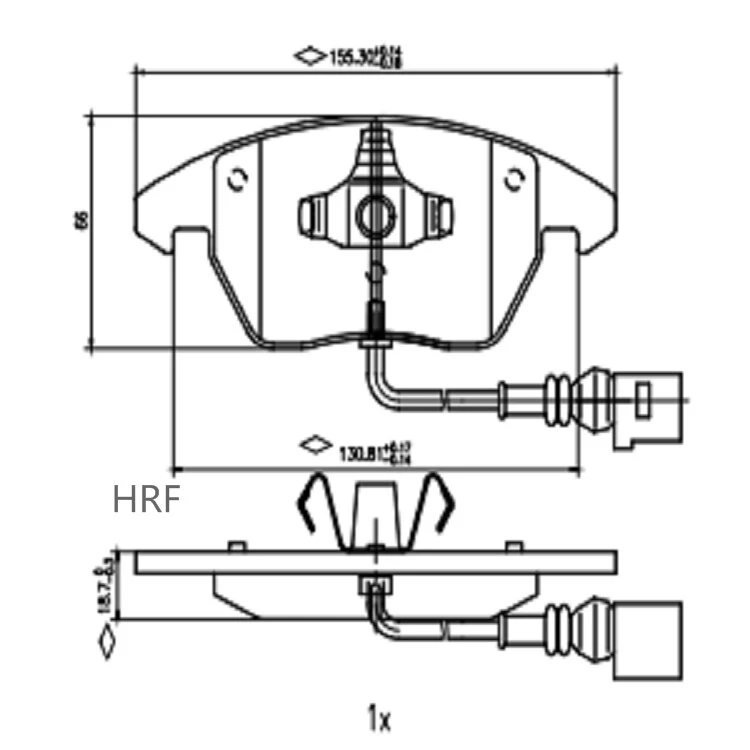
6. Accessory Assembly: Installing silencing pads, wear alarms, clips, and other parts.
7. Quality Inspection: Including hardness test, shear test, salt spray test, dynamometer test, and road simulation.
8. Packaging & Traceability: Coding and warehousing to realize full-process production traceability.
3. Intelligent Manufacturing in Modern Brake Pad Factory
Leading brake pad factory enterprises are accelerating intelligent upgrading:
• Automated production lines with robots to reduce manual errors and improve efficiency.
• AGV logistics systems to optimize material transportation and production rhythm.
• Digital quality control systems to real-time monitor pressure, temperature, and size parameters.
• High-precision testing equipment to simulate extreme working conditions from -40℃ to 600℃.
• Data platforms that shorten R&D cycles, improve yield rates, and enhance response speed to customer orders.
4. Global Brake Pad Factory Competition Pattern
International high-end brake pad factory brands mainly focus on OEM supporting for luxury cars, such as Brembo, TMD Friction, Ferodo, and Bosch. These factories have strong R&D advantages and strict certification systems.
Chinese brake pad factory manufacturers have developed rapidly in recent years, with large annual output and strong export capacity. Many have passed ECE R90, ISO, and environmental protection certifications, gradually entering the global OEM supply chain and high-end aftermarket.
5. Key Quality Standards for Brake Pad Factory Products
• Stable friction coefficient between 0.38 and 0.48
• Excellent heat fade resistance at high temperatures
• Low wear rate and long service life
• Low noise and low dust performance
• Compliance with national and international environmental and safety regulations
6. Development Trends of Brake Pad Factory Industry
• New energy vehicle demand drives brake pad factory to upgrade ceramic and low-metal formulas.
• Industry concentration increases, small-scale factories with backward production capacity are gradually eliminated.
• Copper-free, antimony-free, and low-VOC green production becomes a standard requirement.
• Intelligent brake pads with sensors will be widely used in autonomous driving vehicles.
• Chinese brake pad factory manufacturers accelerate global layout and transform from OEM to independent brands.
Conclusion
The brake pad factory is the core carrier of the braking industry. With the development of automotive intelligence and electrification, modern brake pad factories are moving toward high performance, green production, digitalization, and globalization, providing safer and more reliable braking products for the global automotive market.


